All BPMN Articles

This page presents Business Process Modeling and Notation (BPMN) articles. BPMN documents complex business processes. It provides standardized workflow notation. Symbols represent tasks and decisions. Flows make processes understandable visually. BPMN supports teams and stakeholders. New or existing processes improve. Inefficiencies are spotted and optimized. Operations align through shared understanding. Basics explain BPMN key elements. Articles here deepen BPMN knowledge.

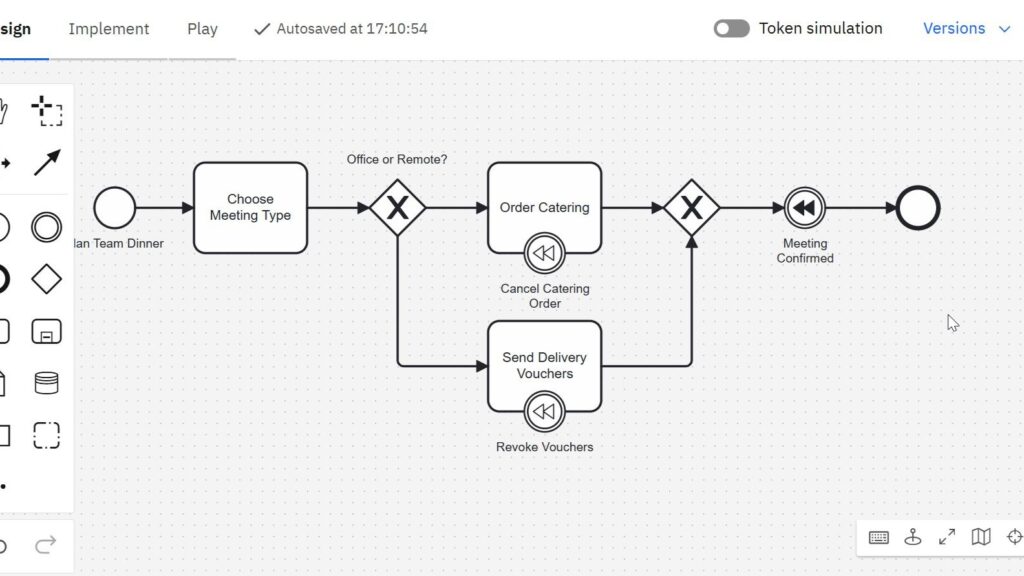
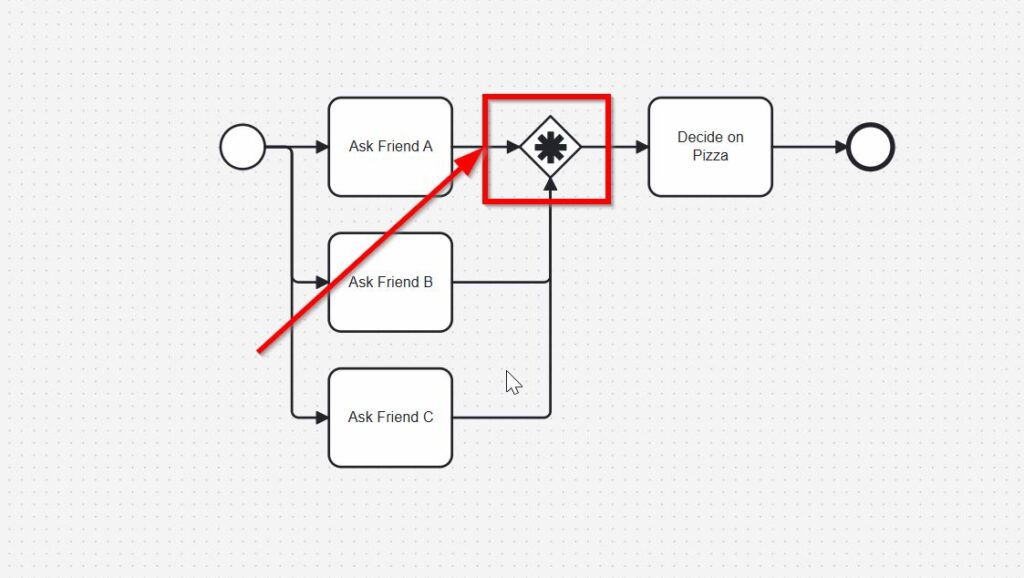
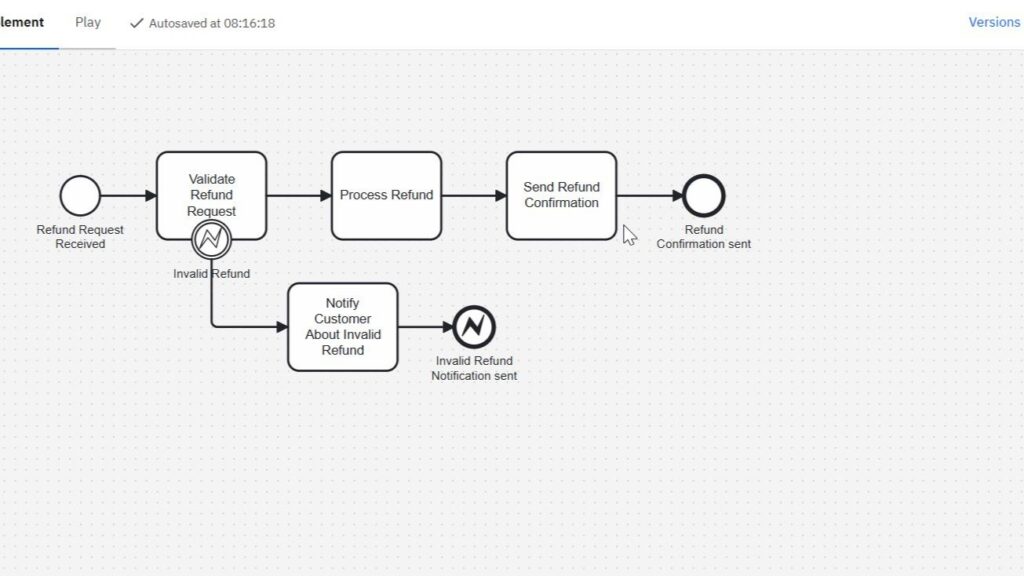
Partial screenshot of a diagram editor showing tasks, gateways, and labeled compensation-style icons under two tasks.

How to Use the Compensation Event in BPMN 2.0

Sometimes, we need to undo what we already did. That’s not just life—it’s business. I often face situations where a previous action must be reversed. Maybe a payment goes back. Maybe a service gets canceled. In BPMN 2.0, I model these reversals with compensation events. In this article, I’ll show you what the compensation event in BPMN is, when to use it, and how it works in practice. I’ll also explain an example to make it crystal clear.

How to Use the Compensation Event in BPMN 2.0 Read More »

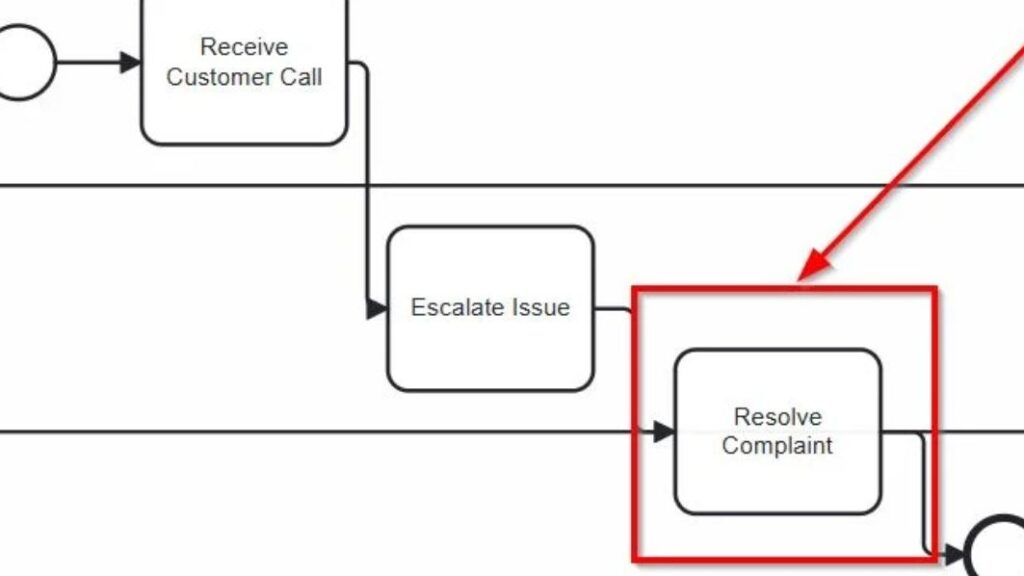
Diagram editor screenshot showing a sequence of steps (“Send Welcome Email,” “Set Up IT Access,” “Assign Mentor,” “Mentor Guide”) ending in a circle highlighted with a red box and arrow.

What is Process Management?

What is process management? At first, the term may sound technical. However, it simply describes how companies structure, control, and improve their daily work. In this article, I explain why process management matters, how it supports better business operations, and how BPMN helps visualize processes. In addition, I use a simple example with a diagram to make the topic easier to understand.

What is Process Management? Read More »

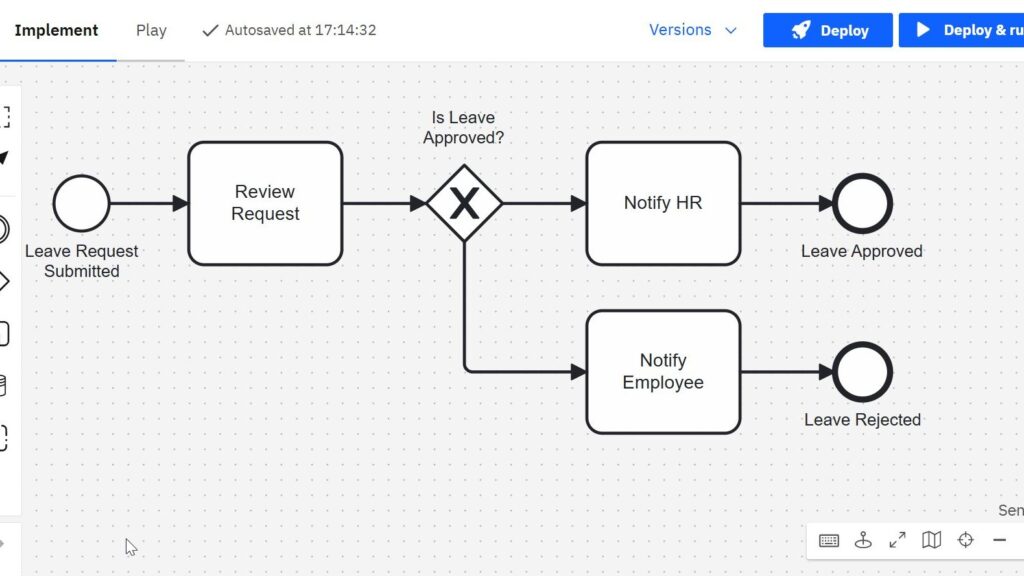
Workflow diagram starting with “Leave Request Submitted,” followed by “Review Request,” a decision diamond labeled “Is Leave Approved?,” and two outcomes ending in circles labeled “Leave Approved” and “Leave Rejected.”

What is BPMN – Business Process Management and Notation?

What is BPMN and why does it matter in daily business work? I use BPMN to understand, describe, and improve processes in a clear way. It helps me see how work flows from one step to the next and where problems may appear. As a result, BPMN supports better process management, clearer communication, and more efficient workflows. This overview gives an easy introduction to the topic.

What is BPMN – Business Process Management and Notation? Read More »

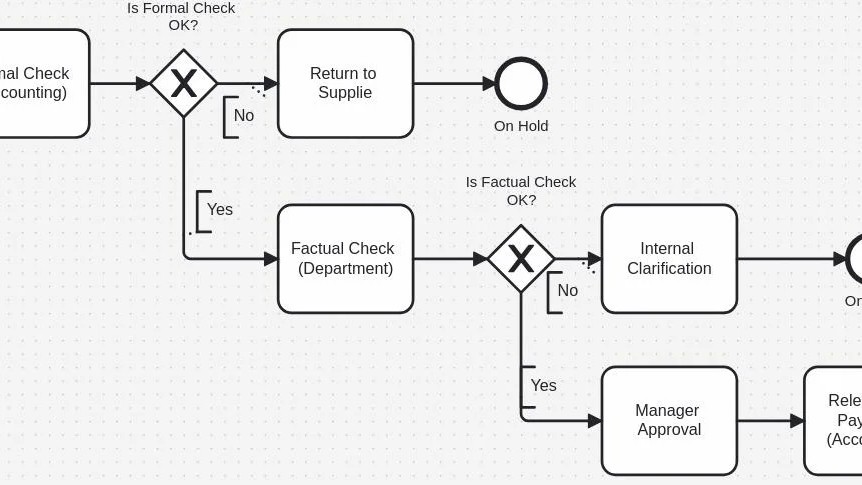
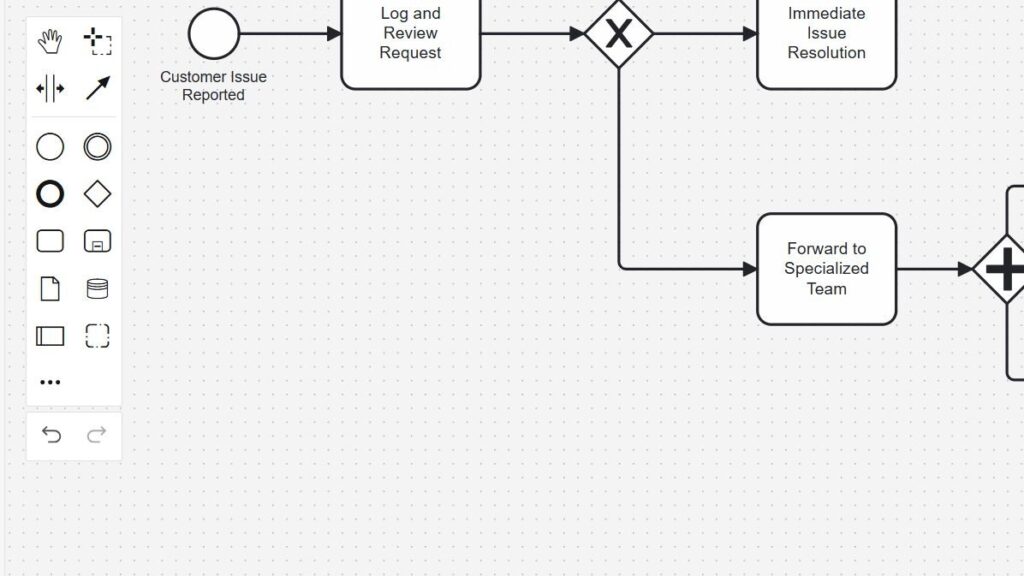
Flowchart-style diagram segment with rounded rectangles, a diamond containing an “X,” and “Yes/No” branches (text partially readable).

Process vs. Algorithm – What’s the Difference?

Understanding the difference between a process and an algorithm helps in business and technology. I often see both terms mixed up, but they describe different ideas. A process shows how work flows through people, roles, and results. An algorithm defines exact steps to solve a problem. In this article, I explain process vs. algorithm and show how both concepts can support each other.

Process vs. Algorithm – What’s the Difference? Read More »

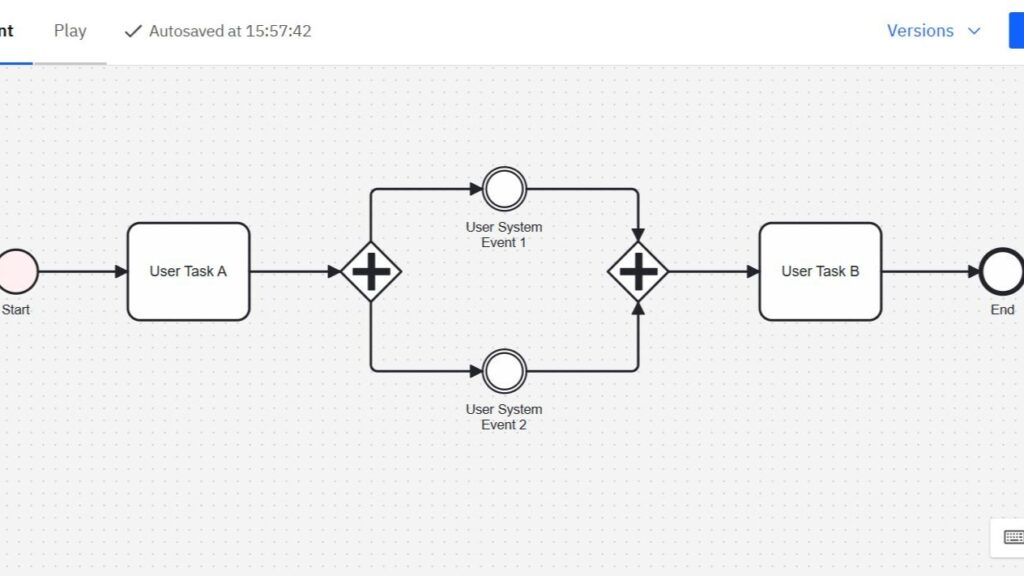
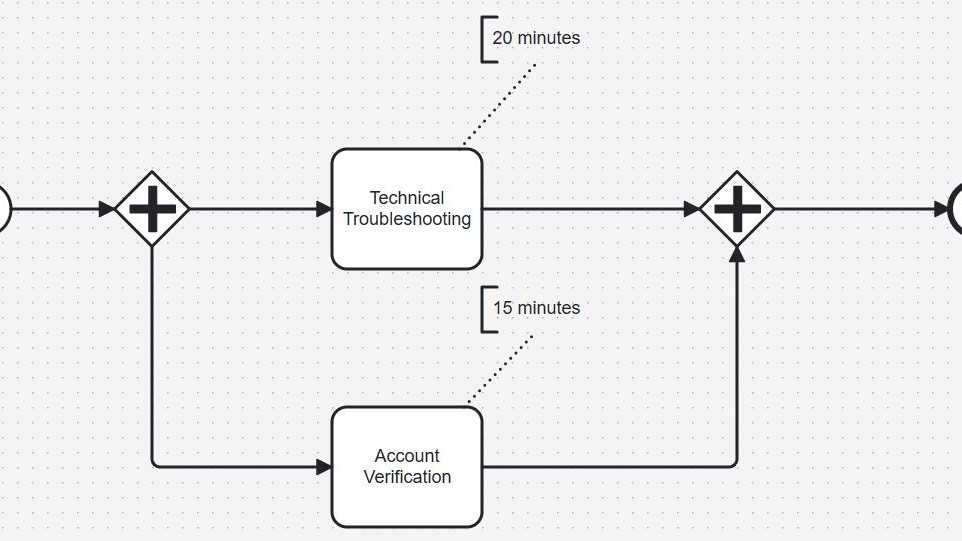
Cropped diagram with two tasks (“Technical Troubleshooting” and “Account Verification”) between plus-diamond split and plus-diamond merge, with 20/15 minute callouts.

Parallel Gateways in BPMN 2.0: Understanding and Using Them Effectively

Parallel gateways in BPMN 2.0 help me model tasks that should run at the same time instead of one after another. This makes processes faster and often easier to understand. In this article, I explain parallel gateways in BPMN 2.0 in a clear and simple way. As a result, I can show how parallel flows work and when this gateway improves process efficiency.

Parallel Gateways in BPMN 2.0: Understanding and Using Them Effectively Read More »

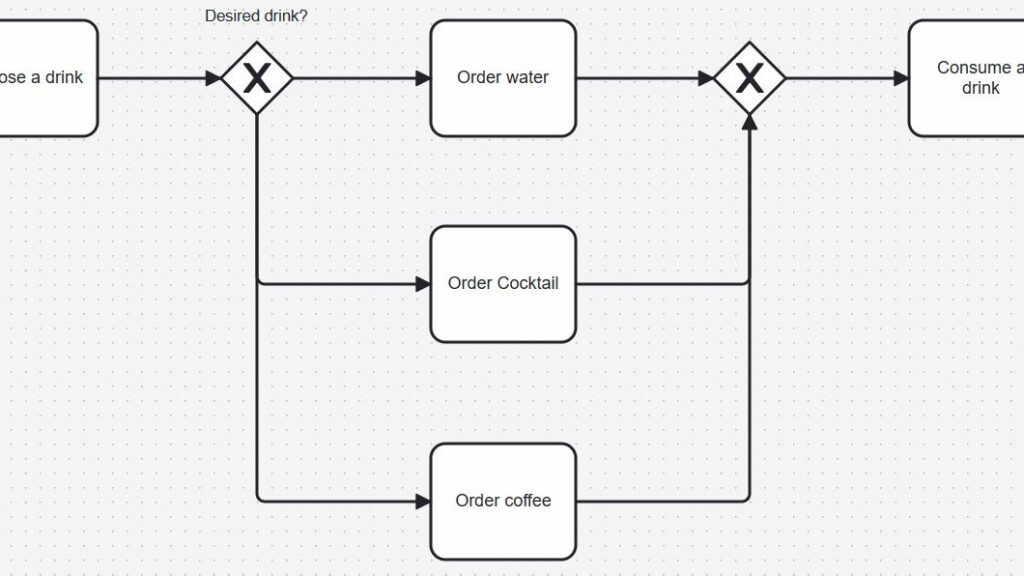
Cropped decision flow labeled “Desired drink?” with diamond “X” gateway branching to “Order water,” “Order Cocktail,” and “Order coffee,” then rejoining.

Exclusive Gateways in BPMN 2.0: Clear and Simple

Exclusive gateways in BPMN 2.0 help me model clear decision paths in a process. They show that only one path continues after a condition is checked. Therefore, they are useful when I want to make business rules easy to understand. In this article, I explain exclusive gateways in BPMN 2.0 with a simple example so I can show how they work in practice and why they improve process clarity.

Exclusive Gateways in BPMN 2.0: Clear and Simple Read More »

Close-up of a rounded rectangle labeled “Buying medicine” with an incoming arrow from the left and outgoing arrow to the right.

BPMN Core Elements

BPMN core elements can look complex at first. I felt the same when I started. However, once I understood the basics, process modeling became much easier. BPMN core elements help me describe events, tasks, and sequence flows in a clear and structured way. As a result, I can build process diagrams that are easier to read, explain, and improve.

BPMN Core Elements Read More »

Partial diagram showing a start circle connected by an arrow to an unlabeled rounded rectangle near a dashed boundary line (cropped view).

Process Basic Concepts: Your Key to Clear Business Workflows

Have you ever looked at a process diagram and felt lost? I know that feeling well. Business workflows can seem simple, but they often hide complex details. That is why process basic concepts matter. Once you understand the foundation, every process becomes easier to follow. In this article, I explain the key ideas that help you read workflows, see structure, follow flow, and spot problems early.

Process Basic Concepts: Your Key to Clear Business Workflows Read More »

Partial diagram with a dashed group boundary labeled “Group 1,” an unlabeled rounded rectangle, and an arrow leading to a diamond with an “X.”

The Participant Perspective in BPMN

The participant perspective in BPMN changed how I understand process models. At first, it seemed difficult. However, I soon saw that perspective is essential for clear modeling. The participant perspective in BPMN helps me understand who takes part in a process, how responsibilities are shared, and where interactions happen. As a result, I can create process models that are easier to read and explain.

The Participant Perspective in BPMN Read More »

Scroll to Top
WordPress Cookie Plugin by Real Cookie Banner