All Process Management Articles

This page presents process management articles. Organizations operate through defined processes. Processes transform inputs into outcomes. They shape daily organizational work. Poor management causes inefficiencies and waste. Process management analyzes and optimizes. It designs, executes, and monitors. Workflows improve through continuous adaptation. Bottlenecks and resources are examined. Streamlined operations boost productivity significantly. Articles here deepen process management knowledge.

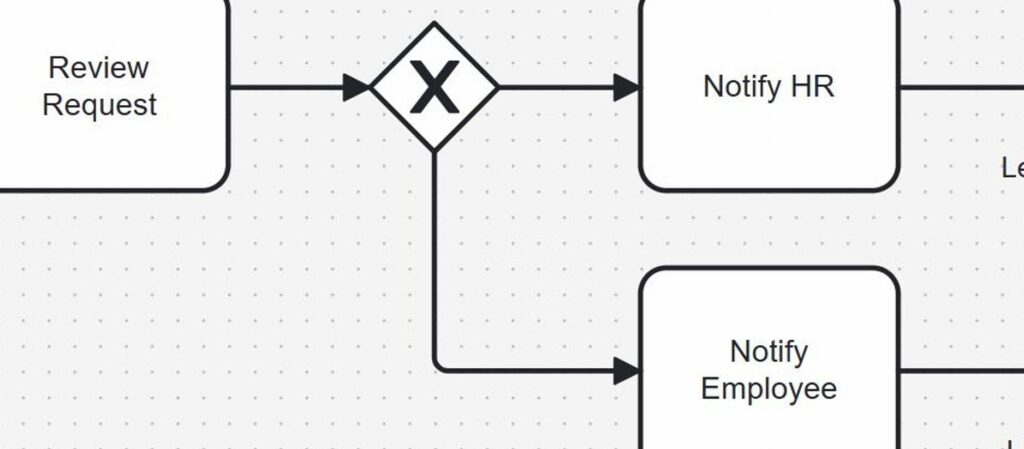
Cropped flowchart showing a diamond with an “X” splitting the flow toward “Notify HR” and “Notify Employee.”

Why Process Orientation Matters

Process orientation helps organizations structure workflows in a clear and efficient way. It focuses on documenting, standardizing, and improving business processes. As a result, employees understand their roles, responsibilities, and handovers better. This improves coordination, reduces confusion, and supports smoother daily operations.

Why Process Orientation Matters Read More »

Diagram editor screenshot showing a sequence of steps (“Send Welcome Email,” “Set Up IT Access,” “Assign Mentor,” “Mentor Guide”) ending in a circle highlighted with a red box and arrow.

What is Process Management

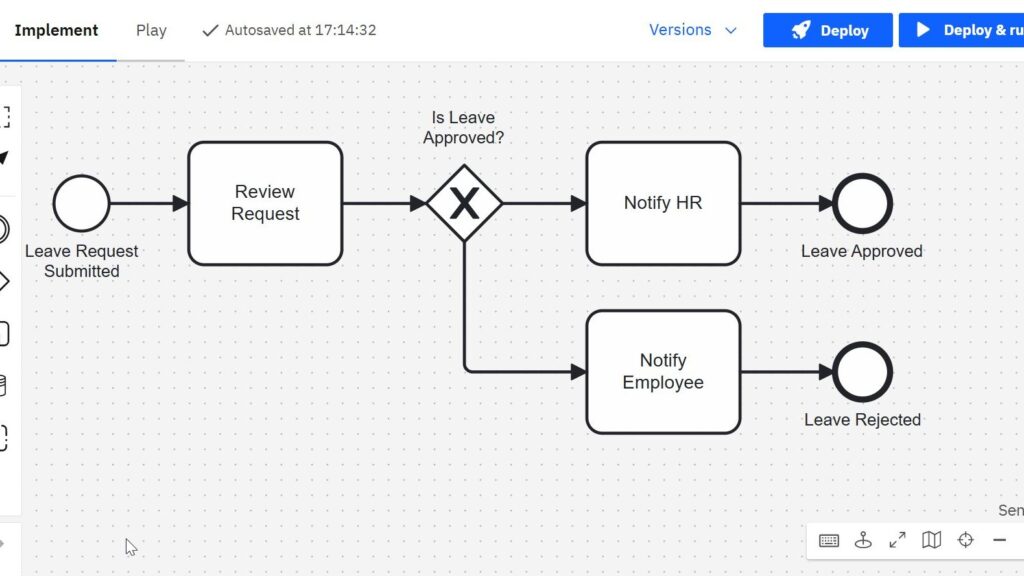
What is process management? At first, the term may sound technical. However, it simply describes how companies structure, control, and improve their daily work. In this article, I explain why process management matters, how it supports better business operations, and how BPMN helps visualize processes. In addition, I use a simple example with a diagram to make the topic easier to understand.

What is Process Management Read More »

Workflow diagram starting with “Leave Request Submitted,” followed by “Review Request,” a decision diamond labeled “Is Leave Approved?,” and two outcomes ending in circles labeled “Leave Approved” and “Leave Rejected.”

What is BPMN – Business Process Management and Notation

What is BPMN and why does it matter in daily business work? I use BPMN to understand, describe, and improve processes in a clear way. It helps me see how work flows from one step to the next and where problems may appear. As a result, BPMN supports better process management, clearer communication, and more efficient workflows. This overview gives an easy introduction to the topic.

What is BPMN – Business Process Management and Notation Read More »

Design and Analysis in the Business Process Lifecycle

Before any process can be automated, monitored, or improved, it must first be understood. That’s why the design and analysis phase is the foundation of the business process lifecycle. In this five-part series, I guide you through every stage of the lifecycle. We begin with design and analysis — the phase where everything starts. It allows me to map out processes, understand stakeholder needs, and prepare for implementation.

Design and Analysis in the Business Process Lifecycle Read More »

How the End-to-End Process Transforms Business Efficiency from the Ground Up

When I first looked into process optimization, I focused too much on individual steps. I would fix issues inside departments but miss the bigger picture. Then I learned about the end-to-end process. That changed everything. Suddenly, I wasn’t just looking at isolated tasks. I was looking at full customer journeys. From the first touchpoint to the final outcome. This article shows you why end-to-end processes matter and how they connect your entire organization — front to back.

How the End-to-End Process Transforms Business Efficiency from the Ground Up Read More »

Process Types: How to Differentiate Core, Support, and End-to-End Processes

When I started working with business processes, I realized something crucial early on: not all processes follow the same logic. Some processes aim to create value for the customer, others exist to support that value creation. And a few manage everything from start to finish. If I want to improve how an organization works, I need to understand each of these process types in detail. In this post, I’ll explain the most common process types, show how they differ, and share real-life examples so you can see how they work in practice.

Process Types: How to Differentiate Core, Support, and End-to-End Processes Read More »

Reimagining Public Sector through Process Orientation

When I first began comparing the public and private sectors, I quickly noticed something fundamental: they follow very different logics. While both aim to serve people, their methods, goals, and structures diverge sharply. In this article, I’ll explain what process orientation means in public service. I’ll also show how it contrasts with private enterprise—and why this matters for modern administration.

Reimagining Public Sector through Process Orientation Read More »

Cropped process diagram with boxes “Immediate Issue Resolution” and “Forward to Specialized Team,” plus-diamond split/merge, and two parallel tasks.

What is BPM

Have you ever wondered how successful companies stay organized and efficient? Well, today, I’m diving into the exciting world of business process management. Clearly understanding what is process management can truly transform the way you run your business. Let’s explore this essential topic together in greater detail!

What is BPM Read More »

Scroll to Top
WordPress Cookie Plugin by Real Cookie Banner