
End-to-end (E2E) processes show how work flows from the first trigger to the final result. They help businesses understand how products or services reach customers. Therefore, they make handovers, responsibilities, and weak points easier to see. With clear E2E processes, organizations can reduce delays, improve quality, and create more efficient operations.
What is process management?
I use process management to organize, control, and improve the way work moves through an organization. A process transforms an input, such as a customer order, into a defined result.
Effective process management connects people, activities, information, and systems. It also defines responsibilities and measures performance. Therefore, every activity should either create value, protect the result, or support necessary work.
A process should produce a clear result through repeatable and controlled work.
Why does process management matter?
Without active management, processes often develop unnecessary steps, delays, and unclear handovers. Different teams may use conflicting information or pursue separate targets. As a result, the complete process can fail even when each department meets its own goals.
Process management makes these problems visible. It helps me remove duplicate work, clarify responsibilities, control risks, and reduce waiting time. Moreover, it gives teams a shared view of how their work contributes to the final result.
What is an end-to-end process?
An end-to-end process covers the complete flow from a defined trigger to a valuable outcome. It does not stop when work moves to another department, system, or external partner.
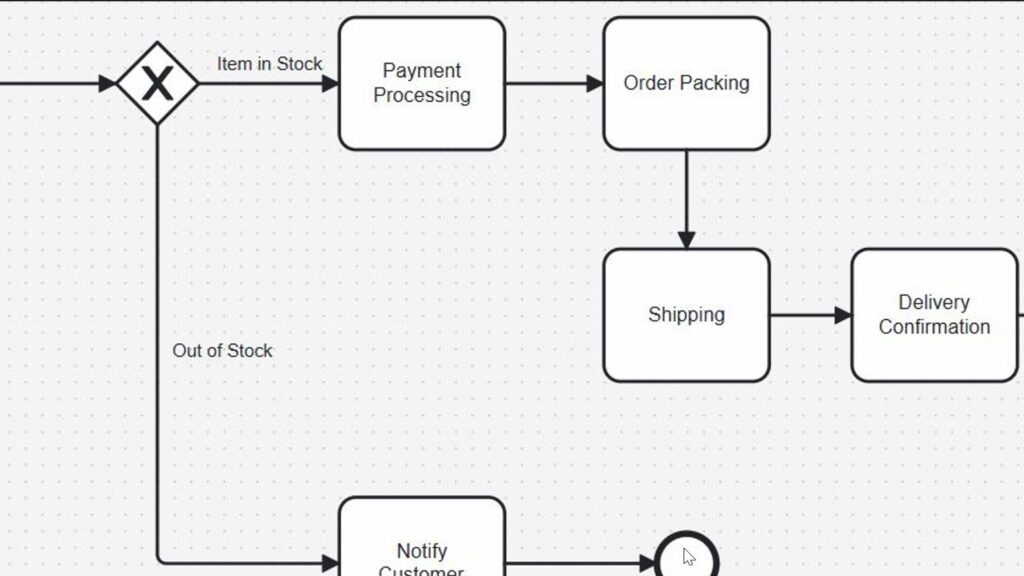
For example, an order process does not end when the sales team records an order. It continues through payment, inventory, packing, shipping, and delivery. The process ends only when the customer receives the expected result and the organization records the correct final status.
An E2E process succeeds only when the complete outcome succeeds.
This perspective prevents local optimization. A warehouse may pack orders quickly, for instance, while customers still receive them late. In that case, the wider process may contain delayed approvals, incorrect stock data, or transport problems.
Key elements of E2E processes
Customer focus
I begin with the customer and the expected outcome. The customer may be an external buyer, employee, supplier, or internal recipient.
Customer requirements define what the process must achieve. These requirements may include quality, delivery time, accuracy, cost, or legal compliance.
Cross-functional collaboration
Most E2E processes cross several organizational boundaries. Therefore, teams must exchange accurate information and coordinate their decisions.
I define each important responsibility and handover. In addition, I assign one process owner who remains accountable for the complete flow.
Shared responsibility does not replace clear accountability.
Efficiency and control
I examine every activity and ask whether it creates value or provides a necessary control. Then, I simplify repeated work, unnecessary approvals, manual data entry, and avoidable handovers.
Automation can improve speed and accuracy. However, I first understand the process, its data, and its exceptions. Otherwise, automation may only accelerate existing problems.
Continuous improvement
Processes change as customer needs, technologies, regulations, and operating conditions change. Therefore, I monitor both the outcome and the flow.
Useful measures include total completion time, error rate, rework, cost, customer complaints, and delivery reliability. These measures help me identify weaknesses and verify whether a change creates a real improvement.
Example: order fulfillment
I can show the E2E approach through an online store’s order fulfillment process:
- The customer places an order.
- The business validates the order and payment.
- The inventory system reserves the products.
- The warehouse picks and packs the order.
- The shipping provider collects the package.
- The business sends tracking information.
- The customer receives the order.
- The organization records the completed delivery.
Exceptions also belong to the process. For example, payment may fail, stock may be unavailable, or the carrier may lose the package. A complete process defines how the responsible team detects and resolves these cases.
A delay or error at any stage can affect the customer. Therefore, I do not measure only individual activities. I also measure the complete time from order acceptance to delivery, the percentage of correct and punctual deliveries, and the number of orders that require rework.
How I improve an E2E process
First, I define the trigger, customer, and expected outcome. Next, I map the actual flow across all participating teams and systems. I also include important decisions, handovers, and exceptions.
Then, I identify delays, duplicate work, unclear responsibilities, data problems, and unnecessary controls. After implementing improvements, I compare the new results with the previous performance.
Finally, I review the process regularly. This continuous cycle helps me maintain performance and respond to new requirements.
Final thoughts
End-to-end processes connect separate activities to one customer outcome. They make dependencies, responsibilities, delays, and weaknesses easier to understand.
By managing the complete flow, I can improve coordination, reduce waste, control risks, and deliver more reliable results.
The purpose of E2E process management is not to create more documentation. It is to improve the complete result.
What’s Next
Now that I have explained end-to-end processes, I can go one level deeper. An E2E process does more than connect activities. It shows how the full workflow affects quality, speed, cost, and customer value.
Read How the End-to-End Process Transforms Business Efficiency from the Ground Up next. In that article, I show how end-to-end thinking helps organizations improve from the foundation. Therefore, you can see how better handovers, clearer responsibilities, and smoother workflows create stronger business performance. As a result, you can understand why E2E process improvement matters for long-term efficiency.
Management Builds the Foundation for Efficient Work
Read Management to see how I connect business goals, requirements, services, and processes in one practical overview. In the main article, I explore Management, Requirements Management in the IREB CPRE context, and Process Management in the BPMN context. Therefore, you can understand how structured management supports efficient end-to-end work. As a result, management helps you improve workflows, strengthen services, and create lasting business value.
Read Processes to see how I connect Process Management, BPMN, and Camunda in one practical overview. In the main article, I show how process management helps me understand workflows, how BPMN helps me model them clearly, and how Camunda supports BPMN modeling as a practical tool. Therefore, you can see how end-to-end work becomes visible, structured, and easier to improve. As a result, processes help you analyze daily operations, design better workflows, and create stronger business outcomes.