
All Process Management Articles

This page presents process management articles. Organizations operate through defined processes. Processes transform inputs into outcomes. They shape daily organizational work. Poor management causes inefficiencies and waste. Process management analyzes and optimizes. It designs, executes, and monitors. Workflows improve through continuous adaptation. Bottlenecks and resources are examined. Streamlined operations boost productivity significantly. Articles here deepen process management knowledge.

RACI Responsibilities in bpmn Process management and Analysis

When I analyze business processes, one problem shows up again and again: unclear responsibilities. This isn’t just a minor detail. It’s one of the main causes of delay, confusion, and even outright failure. Over time, I’ve learned that I cannot improve a process without first fixing who is responsible. In this article, I’ll show you how I deal with unclear responsibilities in process analysis. I’ll walk you through a concrete example and explain how I combine BPMN with a RACI matrix to make sure every task is clearly owned.

RACI Responsibilities in bpmn Process management and Analysis Read More »

How I Improve Workflows Through Process Optimization

Process optimization is my way of working smarter, not harder. It goes beyond saving time or reducing costs—it’s about improving outcomes while protecting quality and employee well-being. Process optimization ensures every step adds value without creating new issues. In this article, I’ll explain why process optimization is a vital part of every improvement project and how it helps achieve lasting, measurable success.

How I Improve Workflows Through Process Optimization Read More »

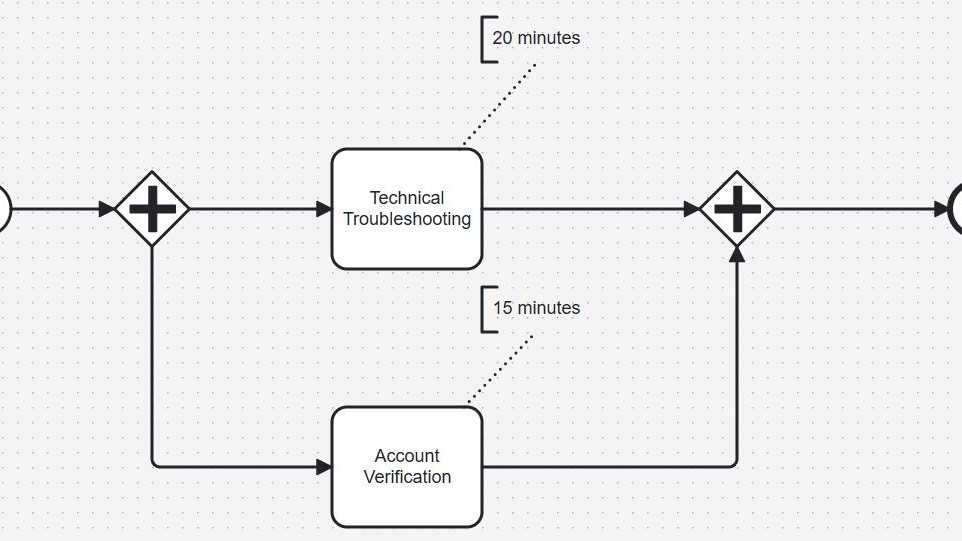
Cropped diagram with two tasks (“Technical Troubleshooting” and “Account Verification”) between plus-diamond split and plus-diamond merge, with 20/15 minute callouts.

Parallel Gateways in BPMN 2.0: Understanding and Using Them Effectively

Parallel gateways in BPMN 2.0 help me model tasks that should run at the same time instead of one after another. This makes processes faster and often easier to understand. In this article, I explain parallel gateways in BPMN 2.0 in a clear and simple way. As a result, I can show how parallel flows work and when this gateway improves process efficiency.

Parallel Gateways in BPMN 2.0: Understanding and Using Them Effectively Read More »

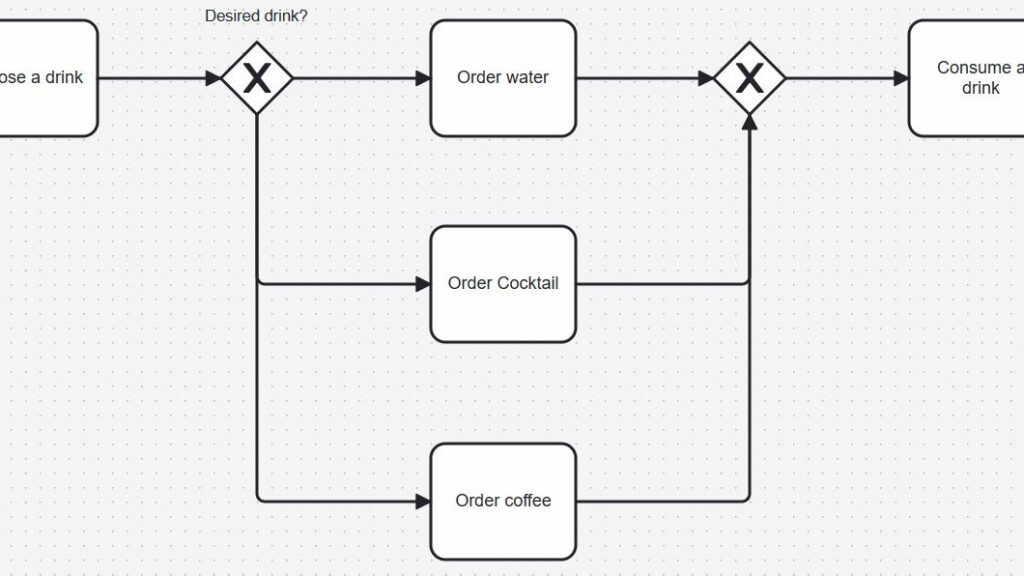
Cropped decision flow labeled “Desired drink?” with diamond “X” gateway branching to “Order water,” “Order Cocktail,” and “Order coffee,” then rejoining.

Exclusive Gateways in BPMN 2.0: Clear and Simple

Exclusive gateways in BPMN 2.0 help me model clear decision paths in a process. They show that only one path continues after a condition is checked. Therefore, they are useful when I want to make business rules easy to understand. In this article, I explain exclusive gateways in BPMN 2.0 with a simple example so I can show how they work in practice and why they improve process clarity.

Exclusive Gateways in BPMN 2.0: Clear and Simple Read More »

Close-up of a rounded rectangle labeled “Buying medicine” with an incoming arrow from the left and outgoing arrow to the right.

BPMN Core Elements

BPMN core elements can look complex at first. I felt the same when I started. However, once I understood the basics, process modeling became much easier. BPMN core elements help me describe events, tasks, and sequence flows in a clear and structured way. As a result, I can build process diagrams that are easier to read, explain, and improve.

BPMN Core Elements Read More »

Partial diagram showing a start circle connected by an arrow to an unlabeled rounded rectangle near a dashed boundary line (cropped view).

Process Basic Concepts: Your Key to Clear Business Workflows

Have you ever stared at a process diagram and felt completely lost? Trust me, I’ve been there. Business processes often look simple at first glance. But when you dig deeper, things can get tricky. That’s exactly why understanding the process basic concepts is so important. Once you know the foundation, everything else becomes easier—faster, too. In this article, I’ll explain the ideas that help you truly understand how processes work. You’ll learn to recognize structure, follow flow, and spot problems before they grow.

Process Basic Concepts: Your Key to Clear Business Workflows Read More »

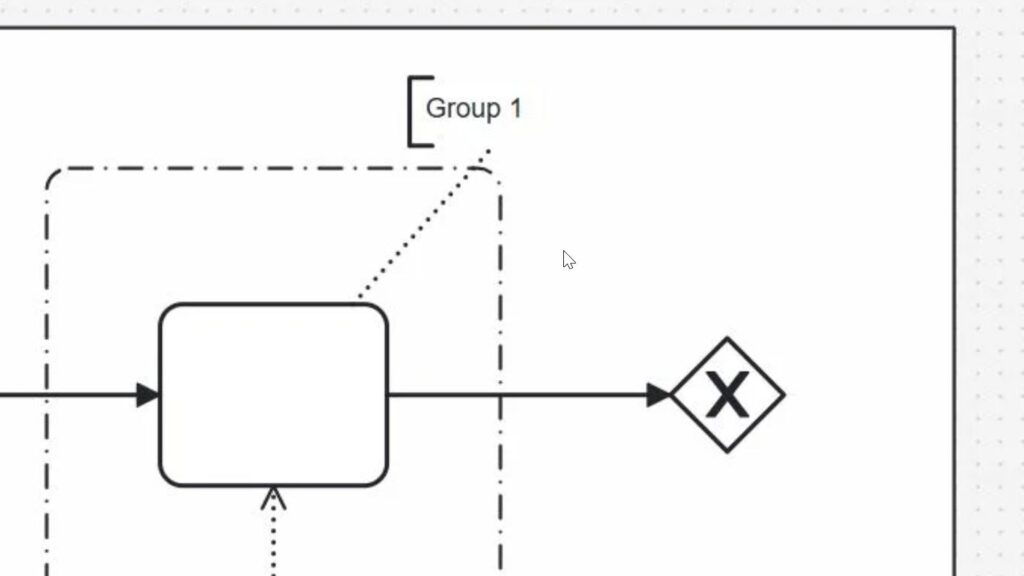
Partial diagram with a dashed group boundary labeled “Group 1,” an unlabeled rounded rectangle, and an arrow leading to a diamond with an “X.”

The Participant Perspective in BPMN

The participant perspective in BPMN changed how I understand process models. At first, it seemed difficult. However, I soon saw that perspective is essential for clear modeling. The participant perspective in BPMN helps me understand who takes part in a process, how responsibilities are shared, and where interactions happen. As a result, I can create process models that are easier to read and explain.

The Participant Perspective in BPMN Read More »

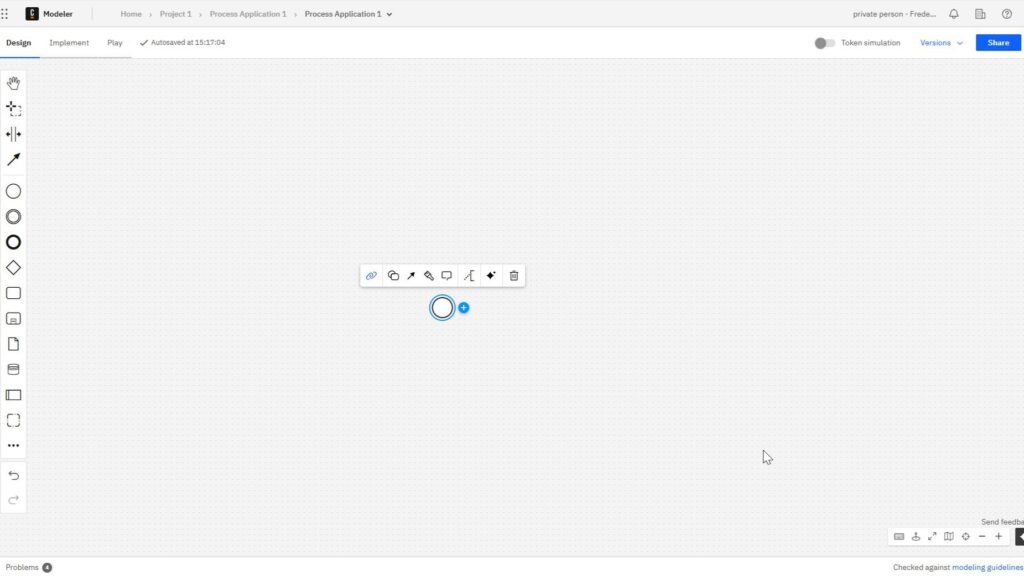
Camunda Modeler diagram editor with a blank grid canvas, left-side shape palette, and a selected small circle element in the center with a floating context toolbar.

What is Camunda?

If you ask what is camunda, you are likely looking for a better way to automate business processes. Camunda helps teams model, run, and improve workflows with BPMN. As a result, you can streamline operations, reduce manual work, and create clearer processes across your organization.

What is Camunda? Read More »

BPMN Project Roles for Effective BPM

BPMN project roles are important when I want clear and useful process models. I learned early that BPMN is not only about symbols and flowcharts. It also depends on the people who create, review, and use the model. Therefore, understanding BPMN project roles helps me improve communication, avoid confusion, and support better process management across the whole business.

BPMN Project Roles for Effective BPM Read More »

Syntax and Semantics of BPMN

If process diagrams often create confusion, you are not alone. I know how frustrating unclear models can be. However, the syntax and semantics of BPMN make a big difference. They help me understand what each element means and how process logic should work. As a result, I can create BPMN diagrams that are clearer, more consistent, and much easier for others to understand.

Syntax and Semantics of BPMN Read More »

Scroll to Top
WordPress Cookie Plugin by Real Cookie Banner