
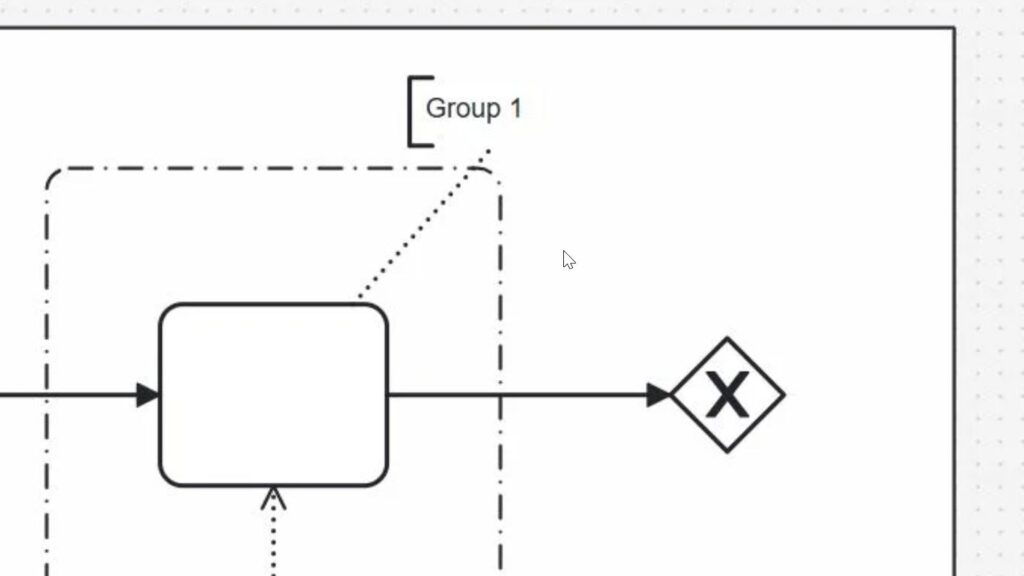
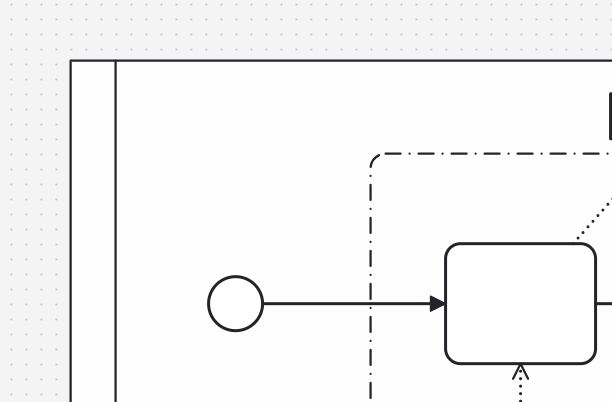
The participant perspective in BPMN changed how I understand process models. At first, it seemed difficult. However, I soon saw that perspective is essential for clear modeling. The participant perspective in BPMN helps me understand who takes part in a process, how responsibilities are shared, and where interactions happen. As a result, I can create process models that are easier to read and explain.
What is BPMN 2.0?
BPMN 2.0 stands for Business Process Model and Notation. It’s a standard for modeling business processes. I rely on it because it’s clear, visual, and universally understood.
It includes various graphical elements, like tasks, events, and gateways. These make it easy to map out a process step-by-step. Additionally, BPMN 2.0 introduces concepts like pools and lanes. These help define who does what and when. In short, BPMN 2.0 is my go-to toolkit for professional process design.
The Power of the Participant Perspective in BPMN
Here’s where things get interesting. The participant perspective in BPMN flips your thinking. It’s not about roles or departments. Instead, it’s about participants, also called pools in BPMN. And yes, that’s a big shift.
I had to learn this: each process has only one participant. This participant controls the full flow. Nobody else can interfere. That means other participants can’t even see how the process works internally. They just send and receive messages.
Let me break this down:
- The participant owns the process.
- Other participants can only interact through message exchange.
- Each participant sees the process from their own view.
Because of that, the same process can look entirely different depending on the participant. This leads to multiple, distinct process models—each accurate for the specific view.
You may think, “Isn’t a participant just a person or a team?” No! That’s the mistake I made early on. In BPMN, a participant is a logical unit. It might map to a person, system, or external company. But technically, it’s much broader.
The participant uses pools to represent their processes. A pool is both a visual container and a logical boundary. Once you understand pools, you unlock a new level of process modeling. It’s not just about drawing lines. It’s about structuring process ownership and communication.
That’s why I always emphasize this: master pools, and you master BPMN.
Furthermore, using this perspective ensures business and IT alignment. Why? Because it mirrors how responsibilities and systems interact in real life. As a result, it creates models that are both accurate and executable.
So, don’t overlook this. The participant perspective in BPMN might seem subtle. But it’s one of the most powerful tools you’ll ever use.
Final Thoughts
To sum up, BPMN offers more than visual process diagrams. It provides structure. It builds bridges between teams, systems, and ideas.
Camunda and BPMN 2.0 give you the right tools. But without understanding the participant perspective in BPMN, those tools lose their strength. Once I embraced this principle, my process models improved dramatically. They became cleaner, clearer, and closer to how the business actually works.
So start modeling with perspective. And remember—each participant sees the world differently. Your models should reflect that.
What’s Next?
If I want to go beyond simple process decisions, the next step is to understand more advanced routing logic. That is why I continue with Complex Gateways in BPMN 2.0: A Simple Guide. In that article, I explain when complex gateways make sense and how they help me model process behavior that standard gateways cannot express clearly. As a result, I can handle demanding BPMN scenarios with more confidence and create process models that reflect real business logic more precisely.
Discover the Full Scope of Requirements Modeling
If I want to understand requirements in a clearer and more useful way, I need more than text alone. I need models that show how concepts, processes, and structures connect. In the main article on Requirements Modeling, I explore Modeling Concepts, Process Modeling with BPMN, and UML to bring these perspectives together. As a result, I can analyze requirements more effectively, communicate them more clearly, and build a stronger foundation for successful system design.
With these insights, I can also take the next step into the main article on Processes. There, I explore Process Management, BPMN, and Camunda as a practical tool for BPMN modeling. Therefore, I can connect requirements with real workflows, clear process structures, and practical improvement work. Click through to learn how Processes help me understand work better, improve collaboration, and create stronger business outcomes.
Credits: The diagram was created with Camunda.
| Read more on Business Process Modeling and Notation (BPMN) |
|---|
| Syntax and Semantics of BPMN BPMN Project Roles for Effective BPM The Participant Perspective in BPMN BPMN Core Elements |