
Massimo

Service Measurement in ITIL Continual Service Improvement (CSI)

In IT service management, real success comes from continuous improvement. That’s where ITIL Service Measurement plays a vital role. It focuses on maintaining customer value by regularly assessing and enhancing service quality, ITSM processes, and overall maturity. In this article, I’ll explain how ITIL Service Measurement supports the ITIL Continual Service Improvement (CSI) cycle and helps organizations deliver consistent, measurable results over time.

Service Measurement in ITIL Continual Service Improvement (CSI) Read More »

The 7-Step Improvement Process: A Practical Guide for Service Engineers

ITIL 7-Step Improvement Process focuses on continuous value creation. It’s not a single task but an ongoing cycle of reviewing and improving IT services. As businesses evolve, services must adapt too. From my experience, this process is at the heart of ITIL, keeping services relevant, efficient, and customer-oriented. In this article, I’ll explain the ITIL 7-Step Improvement Process with a clear real-world example to show how it works in practice.

The 7-Step Improvement Process: A Practical Guide for Service Engineers Read More »

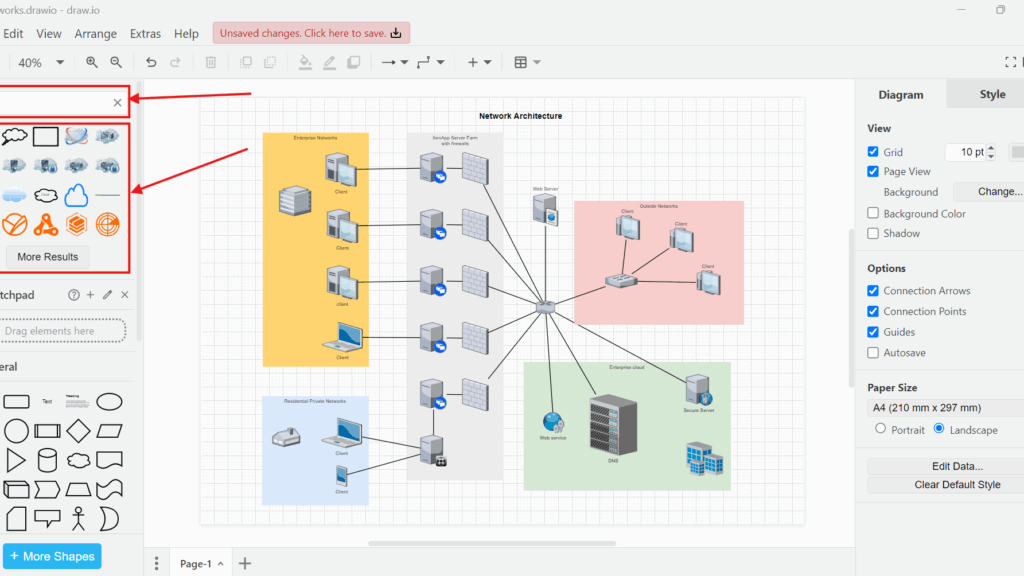
Draw.io interface with the left Shapes sidebar highlighted, including the “Search Shapes” field and shape icons.

How to activate the “Shapes” view in draw.io

When I started using draw.io, I quickly realized how important the right tools are. Visualizing ideas, workflows, or network diagrams requires more than just drawing lines and boxes. I needed a flexible and powerful tool to bring my thoughts onto the digital canvas. That’s when I discovered draw.io. However, one key feature initially confused me: the Shapes View. It disappeared once, and I struggled to get it back. Let me explain how to activate the "Shapes" view in draw.io, so you won’t face the same issue.

How to activate the “Shapes” view in draw.io Read More »

Continual Service Improvement in ITIL: Driving Value Every Day

As a tech enthusiast, I love exploring how IT frameworks improve business performance. One key concept is ITIL Continual Service Improvement. It focuses on analyzing and enhancing IT services over time to boost efficiency and value. In this article, I’ll explain how ITIL Continual Service Improvement works within Service Operations and why it’s essential for long-term IT success. Let’s break it down together in simple terms.

Continual Service Improvement in ITIL: Driving Value Every Day Read More »

Requirements Categories in Requirements Management

I work with requirements every day. I know how important it is to understand their nature. Without clarity, projects lose direction. With clarity, however, the entire team benefits. Requirements are not just lists of needs. They form the backbone of system development and business analysis. I often see teams confuse types of requirements. This confusion can cause delays, wasted effort, and costly rework. That is why I want to show you how requirements categories help us structure and manage them. By using categories, I gain control, improve communication, and strengthen the entire requirements management process.

Requirements Categories in Requirements Management Read More »

IT Operations Management: The Backbone of ITIL Service Operation

ITIL IT Operations Management is essential for keeping IT services reliable and efficient. It focuses on running and maintaining the infrastructure that supports daily business activities. Without it, systems could fail, and service quality would drop. In this article, I’ll explain how ITIL IT Operations Management works, why it matters, and how it ensures smooth, stable operations across your entire IT environment.

IT Operations Management: The Backbone of ITIL Service Operation Read More »

Cropped UML class box titled “Person” listing attributes including “/Age,” “Date of birth [0..1],” and “Client: boolean,” with a dashed «refines» arrow partially visible.

Tips for Requirements Modeling with UML

When working on software projects, applying the right Tips for Requirements Modeling with UML can make all the difference. In my experience, effective modeling depends on clarity, structure, and communication. Using UML diagrams helps visualize complex requirements and align stakeholders. In this article, I’ll share my best Tips for Requirements Modeling with UML, offering practical strategies to make your modeling process more efficient, consistent, and easy to understand.

Tips for Requirements Modeling with UML Read More »

Application Management Function in ITIL Service Operation

In IT service management, issues will always occur. A problem is the hidden cause behind one or more incidents. Often, the real reason isn’t known right away. That’s where ITIL processes help. The ITIL Application Management function focuses on finding and fixing these root causes within applications. In this article, I’ll explain how ITIL Application Management supports problem resolution and ensures reliable, high-performing IT services.

Application Management Function in ITIL Service Operation Read More »

Information modeling for existing systems

Discovering Hidden Gems in Existing Systems

When I first discovered Information modeling for existing systems, I was truly intrigued. Existing systems contain valuable insights that can guide the creation of effective information models. These models go beyond theory — they reveal classes, attributes, relationships, and multiplicities hidden in real data. In my experience, using existing systems for information modeling is both challenging and deeply rewarding, as it bridges the gap between legacy knowledge and future design.

Discovering Hidden Gems in Existing Systems Read More »

Understanding the Technical Management Function in ITIL Service Operation

ITIL Technical Management is one of the key pillars of IT service delivery. It focuses on managing and maintaining the technical infrastructure that supports all IT services. Without it, stability and performance would quickly suffer. In this article, I’ll explain ITIL Technical Management in simple terms, give clear examples, and share practical tips to help you understand how it strengthens daily IT operations.

Understanding the Technical Management Function in ITIL Service Operation Read More »

Mastering Compatibility: A Requirements Engineer’s Guide to Stakeholder Persuasion

As a Requirements Engineer, I focus on managing relationships that shape every project’s success. One key factor is Stakeholder Compatibility—how personalities and behaviors align to support collaboration. Understanding traits like agreeableness helps build trust and reduce conflict. In this article, I’ll explore Stakeholder Compatibility and show how it strengthens communication and persuasion in Requirements Engineering.

Mastering Compatibility: A Requirements Engineer’s Guide to Stakeholder Persuasion Read More »

ITIL Service Desk Function: The Core of ITIL Service Operation

The ITIL Service Desk is the core of daily IT operations. It serves as the single point of contact for all users. Incidents, service requests, and updates flow through this central hub. The goal is clear communication and fast problem resolution. In this article, I’ll explain how the ITIL Service Desk works, why it matters, and how it helps keep IT services running smoothly every day.

ITIL Service Desk Function: The Core of ITIL Service Operation Read More »

Draw.io canvas with a selected group of elements and the Layers panel showing “Outside Network Layer” and “Main Layer.”

How to Use Layers in draw.io

Layers are a powerful feature in draw.io. They help organize complex diagrams by allowing different levels of abstraction. By using layers, I can manage visibility, focus on specific elements, and enhance clarity. Let me show you how to use layers in draw.io with a practical example.

How to Use Layers in draw.io Read More »

Beyond Boundaries: The Role of Openness in Requirements Engineering

As a Requirements Engineer, I work in the complex world of software development, where every feature must meet user and stakeholder needs. Over time, I’ve learned that Openness in Requirements Engineering is more than a personality trait—it’s a professional strength. It encourages creativity, innovation, and better collaboration. In this article, I’ll explore how Openness in Requirements Engineering drives successful projects and smarter solutions.

Beyond Boundaries: The Role of Openness in Requirements Engineering Read More »

Common Service Operation Activities in ITIL Service Operation

ITIL Service Operation activities keep IT services stable and efficient. They include monitoring, control, console management, and infrastructure management. Each activity ensures systems run reliably and meet business needs. Together, they support consistent performance and user satisfaction. In this article, I’ll explain how these ITIL Service Operation activities work and why they are essential for smooth daily operations.

Common Service Operation Activities in ITIL Service Operation Read More »

Scroll to Top
WordPress Cookie Plugin by Real Cookie Banner