Massimo

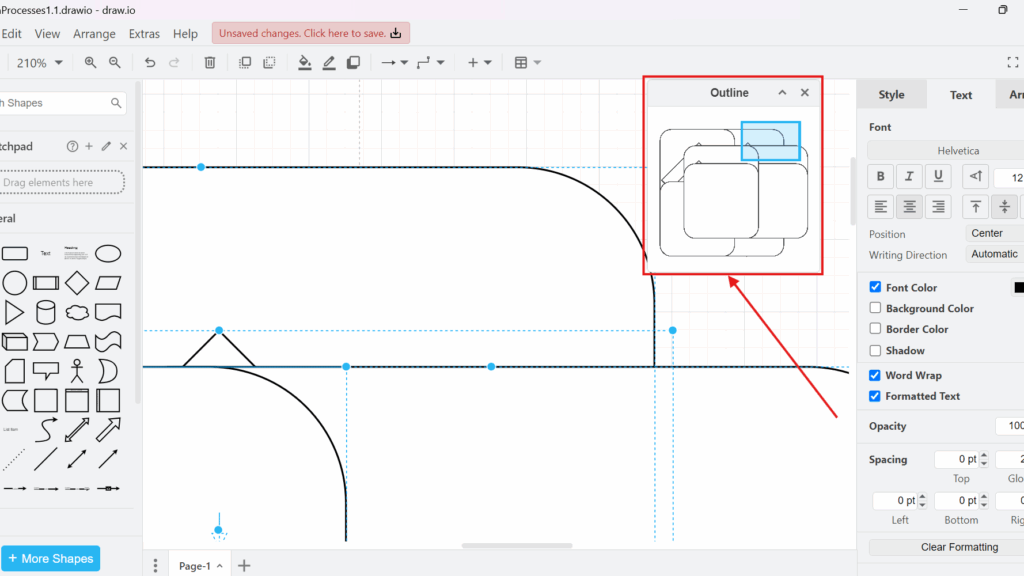
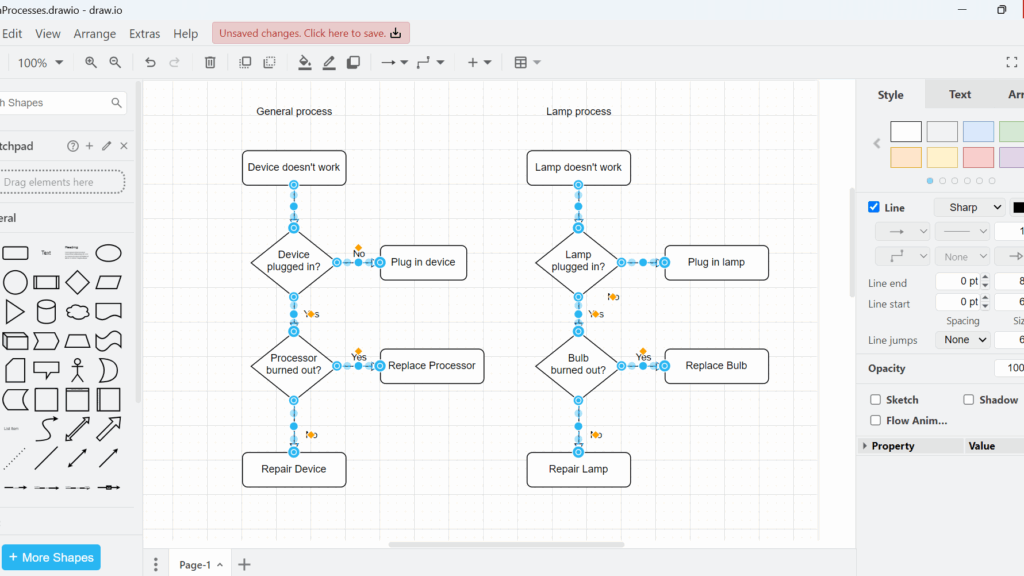
Draw.io editor zoomed in with the floating “Outline” mini-map panel highlighted on the right.

How to Activate the Outline View in draw.io

When working with large diagrams in draw.io, navigating efficiently becomes essential. Scrolling and zooming can be time-consuming, but there is a simple solution: the Outline View. This feature allows me to see an overview of my entire diagram while quickly jumping to any section. In this post, I will show you how to activate the Outline View, explain its benefits, and provide a relevant business case to demonstrate its usefulness.

How to Activate the Outline View in draw.io Read More »

Handling Stress as a Requirements Engineer: Lessons from Neuroticism

As a Requirements Engineer and IT Business Analyst, I constantly face new challenges that test both logic and empathy. One topic that fascinates me is how personality traits shape our behavior and performance. In this article, I explore neuroticism as a Requirements Engineers, examining how emotional sensitivity influences communication, decision-making, and growth. Understanding this trait helps us manage stress better and strengthen collaboration within complex project environments.

Handling Stress as a Requirements Engineer: Lessons from Neuroticism Read More »

Problem Management Process in ITIL Service Operation

ITIL Problem Management plays a key role in keeping IT services stable and reliable. In ITIL, a problem is the hidden cause behind one or more incidents. Often, the exact cause isn’t clear when the issue first appears. That’s why the process exists. It investigates deeply to find root causes and eliminate them. By doing so, ITIL Problem Management helps prevent recurring incidents and improves long-term service quality.

Problem Management Process in ITIL Service Operation Read More »

Beyond Code: Leveraging the Biopsychosocial Model in Requirements Engineering

As a Requirements Engineer and IT Business Analyst, I strive to understand the many layers of human behavior when designing software for diverse users. The Biopsychosocial Model Requirements Engineering offers a holistic way to do this by integrating biological, psychological, and social perspectives. In this article, I explore how applying this model deepens understanding, improves user alignment, and enhances the overall quality of requirements and project outcomes.

Beyond Code: Leveraging the Biopsychosocial Model in Requirements Engineering Read More »

Access Management Process in ITIL Service Operation

In today’s digital world, controlling access to IT systems is essential. Businesses must protect data while allowing the right people to work efficiently. ITIL Access Management helps achieve this balance. It ensures only authorized users can reach specific systems or information, reducing security risks. At the same time, it keeps operations smooth and reliable. In this article, I’ll explain how it works and why it’s vital for every organization.

Access Management Process in ITIL Service Operation Read More »

Unlocking Effective Communication: A Requirements Engineer’s Perspective

As a Requirements Engineer and IT Business Analyst, my work depends on clear, purposeful communication. It’s more than sharing facts — it’s about building logical arguments that inspire agreement and progress. Mastering reasoning as a Requirements Engineering skill helps me analyze situations, connect ideas, and guide teams toward sound decisions. Let’s explore how strong reasoning shapes better understanding and drives successful project outcomes.

Unlocking Effective Communication: A Requirements Engineer’s Perspective Read More »

ITIL Request Fulfillment Process: simplified

IT services are vital for every modern business. Yet managing them can be complex. That’s why ITIL exists. It gives a clear framework to align IT with business goals and keep users satisfied. A key part of this framework is the ITIL Request Fulfillment Process. It focuses on handling user requests quickly and efficiently, ensuring smooth service delivery and consistent support. In this article, I’ll explain how it works and why it matters.

ITIL Request Fulfillment Process: simplified Read More »

a man pitching showing paper to a bunch of business people illustrating negotiation requirements engineers

Negotiation Mastery: Essential Skills for Requirements Engineers

As **Requirements Engineers** and IT Business Analysts, we constantly balance diverse interests to reach shared goals. Mastering **negotiation as a Requirements Engineers** is essential to align stakeholders and drive success. In this guide, I explore the fundamentals of negotiation, its vital role in our field, and practical methods to strengthen this skill. Effective negotiation helps transform differing viewpoints into cohesive, goal-oriented project outcomes.

Negotiation Mastery: Essential Skills for Requirements Engineers Read More »

Design and Analysis in the Business Process Lifecycle

Before any process can be automated, monitored, or improved, it must first be understood. That’s why the design and analysis phase is the foundation of the business process lifecycle. In this five-part series, I guide you through every stage of the lifecycle. We begin with design and analysis — the phase where everything starts. It allows me to map out processes, understand stakeholder needs, and prepare for implementation.

Design and Analysis in the Business Process Lifecycle Read More »

Streamlining the ITIL Incident Management Process

Managing IT services effectively is no small task, especially in today’s fast-paced digital world. That’s where ITIL, the Information Technology Infrastructure Library, comes into play. It provides a structured framework to ensure IT services run smoothly, align with business goals, and deliver maximum value. Among its various components, the Incident Management process stands out. It’s the first line of defense against disruptions, helping organizations restore normal operations quickly while keeping users satisfied. In this article, I’ll walk you through the Incident Management process, its purpose, and why it’s essential for seamless IT operations.

Streamlining the ITIL Incident Management Process Read More »

How the End-to-End Process Transforms Business Efficiency from the Ground Up

When I first looked into process optimization, I focused too much on individual steps. I would fix issues inside departments but miss the bigger picture. Then I learned about the end-to-end process. That changed everything. Suddenly, I wasn’t just looking at isolated tasks. I was looking at full customer journeys. From the first touchpoint to the final outcome. This article shows you why end-to-end processes matter and how they connect your entire organization — front to back.

How the End-to-End Process Transforms Business Efficiency from the Ground Up Read More »

Process Types: How to Differentiate Core, Support, and End-to-End Processes

When I started working with business processes, I realized something crucial early on: not all processes follow the same logic. Some processes aim to create value for the customer, others exist to support that value creation. And a few manage everything from start to finish. If I want to improve how an organization works, I need to understand each of these process types in detail. In this post, I’ll explain the most common process types, show how they differ, and share real-life examples so you can see how they work in practice.

Process Types: How to Differentiate Core, Support, and End-to-End Processes Read More »

The Power of Storytelling in Requirements Engineering

As a Requirements Engineer and IT Business Analyst, my work centers on understanding and conveying stakeholder needs clearly. Recently, I discovered a powerful approach that reshaped how I communicate and connect with people — Storytelling in Requirements Engineering. By turning complex requirements into relatable narratives, I’ve found new ways to inspire engagement, foster understanding, and drive clarity throughout every stage of a software project.

The Power of Storytelling in Requirements Engineering Read More »

Scroll to Top
WordPress Cookie Plugin by Real Cookie Banner