All Elicitation Articles

This page presents elicitation articles. Elicitation gathers and documents requirements. It discovers stakeholder needs systematically. Interviews, workshops, and surveys help. Observations capture essential requirement details. Both functional and non-functional matter. Constraints and quality attributes included. Skilled facilitation encourages open communication. Requirements are prioritized and validated. Effective elicitation reduces project risks. Continuous elicitation adapts to changes.

Cropped TARGET Services diagram showing the T2 Service CLM area with Main Cash Accounts (MCA), central bank operations, liquidity management, and liquidity transfer arrows.

Defining the System Boundary of T2

The system boundary of T2 defines which responsibilities belong to T2 and which belong to its environment. I use this boundary to separate the T2 core from connected TARGET Services and shared infrastructure. T2 combines Central Liquidity Management (CLM) and Real-Time Gross Settlement (RTGS). Other services exchange liquidity, data, or settlement instructions with T2, but that does not make them part of T2. A clear boundary therefore keeps requirements, interfaces, ownership, and testing precise.

Defining the System Boundary of T2 Read More »

TARGET Services T2 in the TARGET Landscape

When I analyse T2 in TARGET Services, I do not treat it as an isolated payment system. I place it inside the wider Eurosystem infrastructure for payments, securities, instant payments, and collateral. This context matters because many important T2 requirements arise at service boundaries. Liquidity moves between systems. Collateral affects credit. Settlement depends on connected services. Therefore, I first define the landscape, responsibilities, and interfaces before I analyse individual T2 functions.

TARGET Services T2 in the TARGET Landscape Read More »

T2 Objectives: Why T2 Exists for Monetary Policy, Stability, and Efficiency

When I analyse T2, I start with its purpose. T2 Objectives explain why the Eurosystem operates this infrastructure and which outcomes its design must support. T2 is more than a platform for large-value payments. It links settlement in central bank money with monetary policy, financial stability, and efficient liquidity management. Therefore, I use these objectives as the basis for understanding its core capabilities, quality requirements, interfaces, and operational rules across TARGET Services.

T2 Objectives: Why T2 Exists for Monetary Policy, Stability, and Efficiency Read More »

What Is T2 within TARGET Services?

When I analyse T2 within TARGET Services, I start with its role in the Eurosystem. T2 is the core service for settling large-value and other time-critical payments in central bank money. It connects payment settlement with central liquidity management and supports monetary policy operations, interbank transfers, and commercial payments. Therefore, understanding T2 means understanding how the Eurosystem moves liquidity safely, finally, and efficiently across its financial market infrastructure.

What Is T2 within TARGET Services? Read More »

Requirements Categories in Requirements Management

Requirements categories in requirements management help me understand how requirements behave over time. Some remain stable. Others change because business rules, technology, regulations, or system knowledge evolve. This distinction matters because I should not manage every requirement in the same way. By classifying requirements carefully, I can identify change risks, improve traceability, focus reviews, and assess impacts more efficiently throughout the system life cycle.

Requirements Categories in Requirements Management Read More »

Mastering Compatibility: A Requirements Engineer’s Guide to Stakeholder Persuasion

As a Requirements Engineer, I focus on managing relationships that shape every project’s success. One key factor is Stakeholder Compatibility—how personalities and behaviors align to support collaboration. Understanding traits like agreeableness helps build trust and reduce conflict. In this article, I’ll explore Stakeholder Compatibility and show how it strengthens communication and persuasion in Requirements Engineering.

Mastering Compatibility: A Requirements Engineer’s Guide to Stakeholder Persuasion Read More »

Elicitation Through Effective Presentation: Insights from a Requirements Engineer

In my work as a Requirements Engineer and IT Business Analyst, I’ve learned that gathering requirements is only half the story. The real impact comes from how we share them. That’s where presentation requirements engineering comes in. It’s about turning complex information into clear, engaging communication that aligns everyone’s vision. When we combine strong presentation skills with sound engineering methods, we lay the foundation for successful, collaborative software projects.

Elicitation Through Effective Presentation: Insights from a Requirements Engineer Read More »

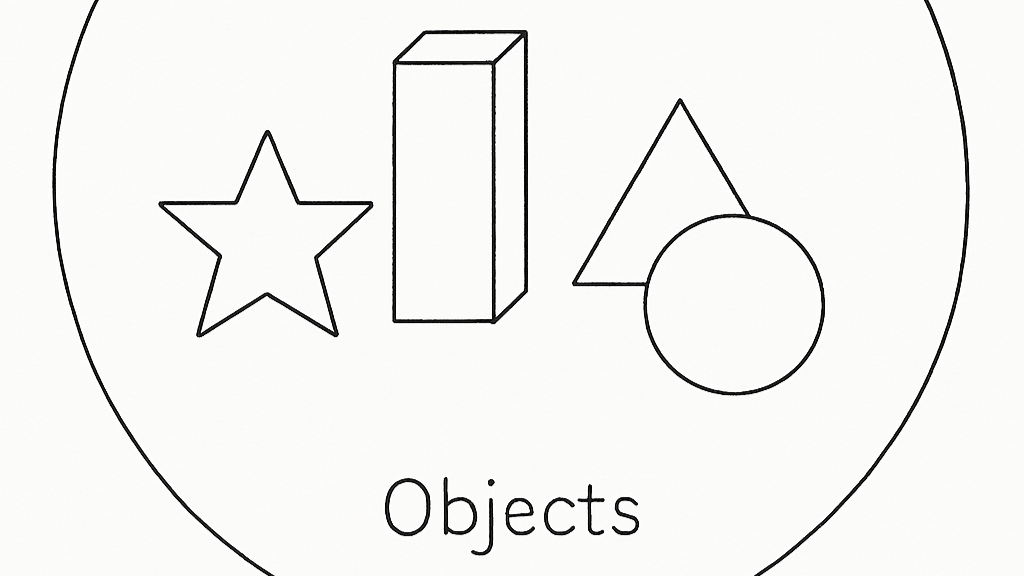
Cropped diagram showing “Objects” beneath a star, rectangular block, triangle, and circle inside part of a larger circular boundary.

Object Name, State, and Behavior in Object-Oriented Programming

In software development, I strive to model the real world effectively. One of my strongest tools is object orientation—it turns complex problems into clear, structured models. But first, we must ask: what defines an object? I focus on three key aspects—object name, status, and object behavior. These elements bring systems to life and make them understandable. In this article, I’ll share how I think about objects and use their behavior to design better, more realistic software systems.

Object Name, State, and Behavior in Object-Oriented Programming Read More »

3 Ways to Read Nonverbal Conflict Signals in Requirements Elicitation

In the complex world of human interaction, understanding gestures and expressions is like decoding a hidden language. As a Body Language Requirements Engineer, I know communication goes far beyond words. Reading subtle signals helps me sense emotions, intentions, and unspoken conflicts. In my work as an IT Business Analyst, mastering body language is not just helpful — it’s essential for resolving misunderstandings and building trust during every phase of a project.

3 Ways to Read Nonverbal Conflict Signals in Requirements Elicitation Read More »

Object-Oriented Thinking: What Are Objects?

Object-oriented design has always fascinated me because it feels so natural and intuitive. Everything I encounter—whether physical or abstract—can be seen as an object with its own properties and behavior. That’s the real strength of this approach. It helps me divide complex systems into smaller, understandable units. In this article, I’ll guide you step by step through the idea of objects in object-oriented design and show how they shape clear, maintainable, and scalable solutions.

Object-Oriented Thinking: What Are Objects? Read More »

Cropped class-style diagram with a box labeled “ Interface,” listing fields and methods, plus dashed dependency arrows to other partially visible boxes.

Object-Oriented Elicitation: Requirements in Complex Systems

When I begin a software project, I don’t just write code—I ask questions to understand the real world behind the system. This becomes crucial when I work in unfamiliar domains, like developing software for a dental clinic. In such cases, object-oriented elicitation is my key approach. It helps uncover, organize, and refine requirements for effective system design. By applying object-oriented elicitation, I can turn complex real-world details into clear, structured, and actionable models.

Object-Oriented Elicitation: Requirements in Complex Systems Read More »

Mastering Argumentation: A Requirements Engineer’s Guide

As a Requirements Engineer and IT Business Analyst, I constantly explore new areas to strengthen my understanding and practical skills. One field that has deeply enriched my work is argumentation. Though my main focus is on analyzing and documenting requirements, I’ve realized that mastering Requirements Engineering Argumentation is essential. It helps me communicate clearly, handle stakeholder conflicts, and guide projects with logic, confidence, and mutual understanding.

Mastering Argumentation: A Requirements Engineer’s Guide Read More »

Leveraging Erikson’s Epigenetic Principle for Stakeholder Solutions

As a Requirements Engineer and IT Business Analyst, I explore human behavior to improve elicitation and collaboration. Erikson’s Epigenetic Principle for Stakeholder Solutions helps me understand motivation, growth, and conflict in projects. Therefore, I can address stakeholder needs with more empathy, guide discussions more clearly, and support better project outcomes.

Leveraging Erikson’s Epigenetic Principle for Stakeholder Solutions Read More »

Unveiling the Essence of Elicitation Objectives in Requirements Engineering

In the world of computer science, requirements act as the blueprint for every successful project. Before development begins, it’s essential to understand these needs clearly. This is where elicitation objectives in engineering come into play. They define what must be achieved during the discovery process to ensure accuracy and alignment. In this article, we explore how elicitation objectives guide effective requirements engineering and IT business analysis.

Unveiling the Essence of Elicitation Objectives in Requirements Engineering Read More »

What is an Achieved Resolution Result in Requirements Engineering?

In the world of technology, conflicts are a constant challenge in requirements engineering and IT business analysis. To address them, experts rely on the resolution result in requirements engineering, a key outcome that ensures clarity and alignment among stakeholders. Software projects are complex, and this process helps transform conflicting needs into actionable solutions. In this article, we explore what a resolution result is and why it plays a vital role in project success.

What is an Achieved Resolution Result in Requirements Engineering? Read More »

Involved Requirements Sources in Requirements Conflicts

In software development, requirements engineering and IT business analysis are essential for defining what a system must achieve. Yet, challenges often occur when goals or expectations clash, leading to requirements sources in requirements conflicts. These conflicts emerge from differing stakeholder needs, priorities, or interpretations. Understanding their origins is key to resolving them effectively. This article explores how managing these sources helps maintain clarity and balance in complex projects.

Involved Requirements Sources in Requirements Conflicts Read More »

Scroll to Top
WordPress Cookie Plugin by Real Cookie Banner