
Massimo

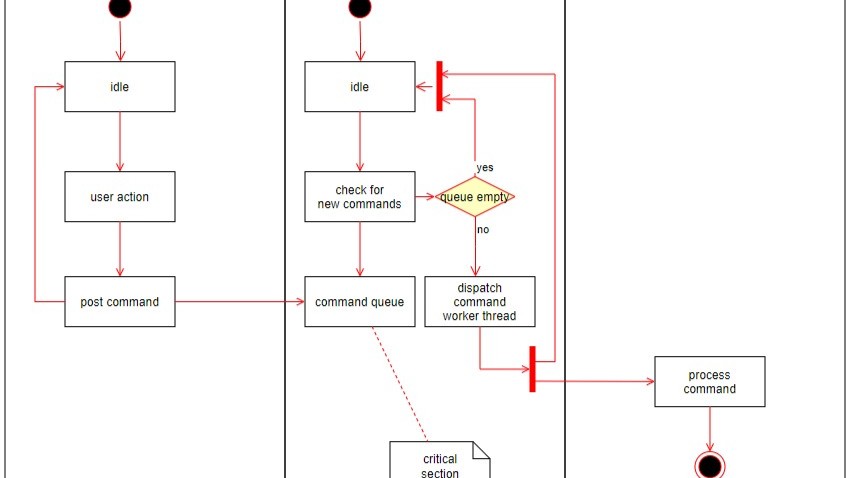
Partial multi-lane flow diagram with steps “idle”, “user action”, “post command”, “check for new commands”, “command queue”, decision “queue empty”, and “process command” connected by red arrows.

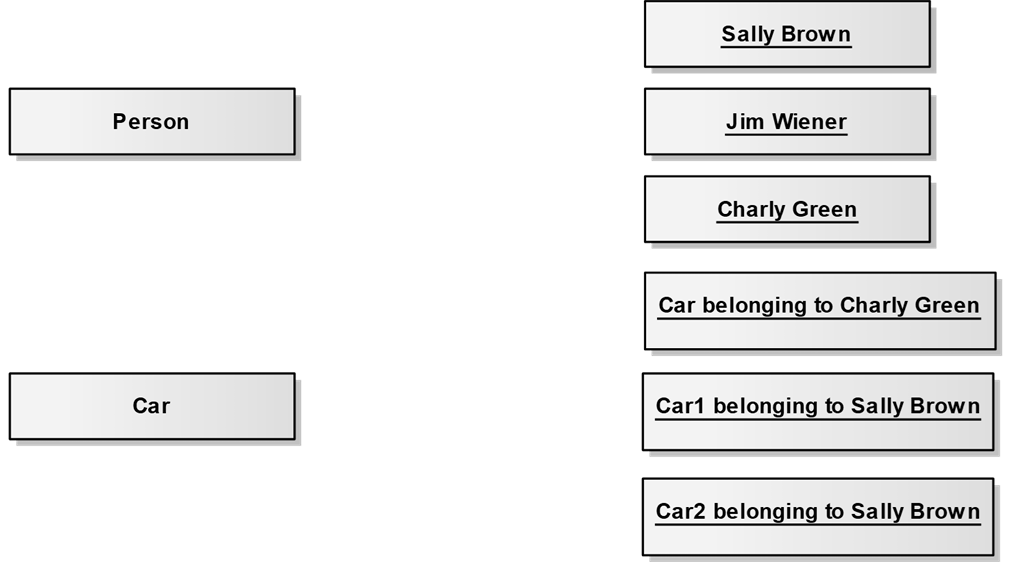
Unlocking the Power of Information Structure Modeling

When I think about creating a system that runs seamlessly, one thing becomes clear — structure matters. True clarity starts with how we organize and represent data. That’s where information structure modeling comes in. It might sound complex at first, but it’s a real game-changer. By modeling information structures effectively, we turn abstract data into meaningful relationships that drive smarter design, improve communication, and make every part of the system work in harmony.

Unlocking the Power of Information Structure Modeling Read More »

Maximizing the Impact of Elicitation Activities in Technical Projects

In technology and science, Elicitation Activities in Technical Projects play a vital role in accurate project planning. They help gather essential requirements that guide development. Much like assembling a complex puzzle, each piece contributes to the bigger picture of project success. This article explores the main components of elicitation activities and explains how they add remarkable value to modern technical projects.

Maximizing the Impact of Elicitation Activities in Technical Projects Read More »

Cropped top navigation area showing a blue “Create” button and a “More” dropdown label.

The Advantages of Using Jira: A Game Changer for Teams

As a tech blogger, I love exploring tools that transform the way we work—and Jira is one that truly stands out. Its flexibility, structure, and collaboration features make it indispensable for teams of all sizes. But what exactly sets it apart? In this article, I’ll break down the key advantages of Jira, showing how it streamlines workflows, improves visibility, and enhances productivity across projects. Let’s uncover why Jira is such a powerful tool for modern teams.

The Advantages of Using Jira: A Game Changer for Teams Read More »

Understanding the Importance of Requirements Elicitation in Tech Projects

In the world of modern development, Requirements Elicitation in Tech Projects stands as a crucial practice. It’s not just a technical term but a structured approach to identifying what a project truly needs. This method guides teams in choosing the right actions and gathering essential data. Yet, it’s no one-size-fits-all formula. Think of it as a flexible recipe—one that adapts to each project’s unique goals, challenges, and context for the best possible results.

Understanding the Importance of Requirements Elicitation in Tech Projects Read More »

“YOUR APPS” list showing “Atlassian Home,” “Jira,” and “Jira Work Management” with their icons.

Comparison of Confluence & Jira: A Comprehensive Guide

As a tech blogger, I’m often asked about the best tools for team collaboration and project management. In this article, I’ll provide a detailed comparison of Jira and Confluence, two powerful Atlassian tools that are often used together. While they share the same ecosystem, each serves a unique purpose. Let’s explore how Jira and Confluence differ, how they complement each other, and how using both can create a complete solution for managing projects and documentation.

Comparison of Confluence & Jira: A Comprehensive Guide Read More »

Eliciting Requirements A Lot Like Doing Research

Have you ever thought about how experts know what a computer program should do? It’s a bit like doing research! In this article, we explore how planning and carrying out requirement activities, known as elicitation, are similar to a research process. Both need careful planning, observation, and analysis. Read more to see how Eliciting Requirements Doing Research helps us discover what users really need.

Eliciting Requirements A Lot Like Doing Research Read More »

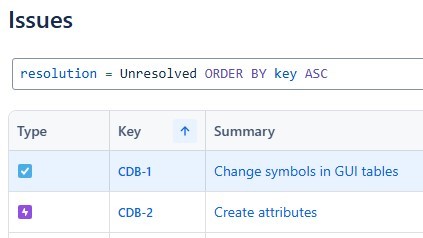
Jira “Issues” list with a query line reading “resolution = Unresolved ORDER BY key ASC” and rows including keys “CDB-1” and “CDB-2.”

Introduction to JIRA Query Language (JQL)

Hello, tech enthusiasts! Today, I’m diving into the world of Jira Query Language (JQL), a powerful feature that makes searching and filtering issues in Jira effortless. If you’ve ever struggled to find specific tasks or manage large projects, JQL is your solution. It allows you to create precise queries, saving time and improving visibility. In this guide, I’ll show you how Jira Query Language works and how it can simplify your workflow and project tracking.

Introduction to JIRA Query Language (JQL) Read More »

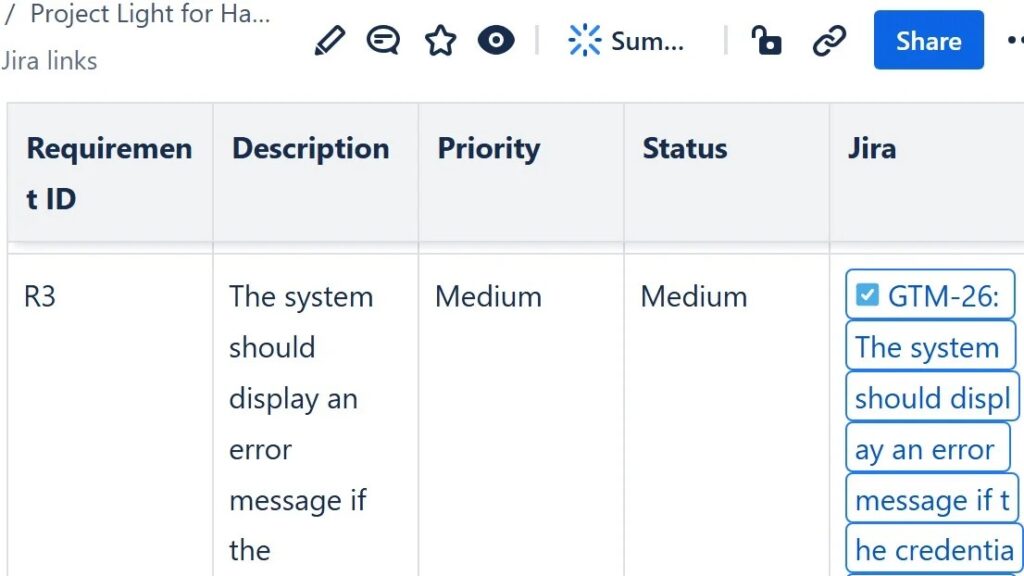
Table labeled “Jira links” with columns including “Requirement ID,” “Description,” “Priority,” “Status,” and “Jira,” showing a linked item starting “GTM-26.”

How to Create a Jira Issue in a Confluence Page

Creating a Jira issue in a Confluence page is a simple yet powerful way to connect documentation with task management. It helps you turn ideas, notes, or meeting outcomes into actionable items instantly. This integration keeps your team aligned and ensures nothing gets lost in the process. In this guide, I’ll walk you through the quick and efficient steps to create a Jira issue directly within Confluence and enhance your workflow.

How to Create a Jira Issue in a Confluence Page Read More »

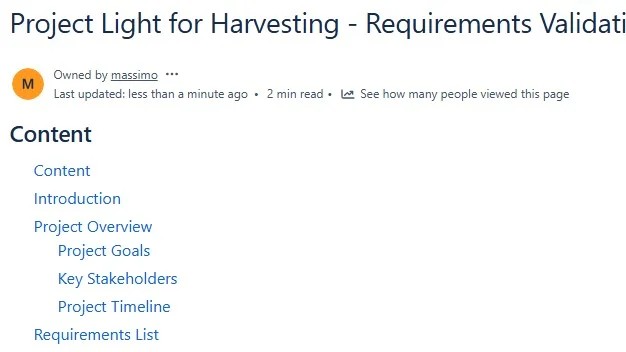
Confluence page header reading “Project Light for Harvesting - Requirements Validati…” with a visible “Content” section listing headings like “Introduction” and “Project Overview.”

How to Structure a Confluence Page for Requirements Validation

Using Confluence for requirements validation can greatly improve collaboration and clarity in software projects. It helps teams document, review, and validate requirements efficiently, keeping everyone aligned. In this guide, I’ll show you how to structure a Confluence page to support clear communication and streamlined validation. As a bonus, you’ll also learn how to integrate Jira with Confluence to strengthen your overall requirements management process.

How to Structure a Confluence Page for Requirements Validation Read More »

Navigating Software Project Estimation and Requirements Elicitation

This article highlights the importance of Project Estimation and Requirements Elicitation in software development. It explains how both ensure successful project outcomes by defining goals and predicting needed resources. It also explores whether every estimation detail can be planned in advance, noting that this depends on how confident we are in our assumptions. Read more about navigating Project Estimation and Requirements Elicitation effectively!

Navigating Software Project Estimation and Requirements Elicitation Read More »

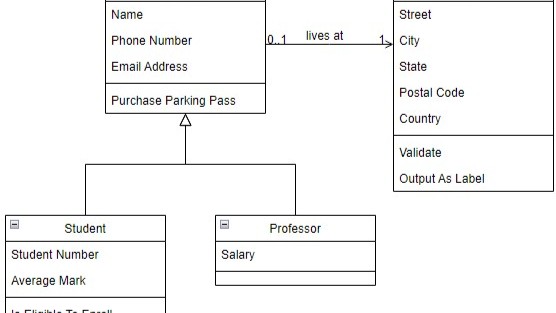
Partial class-style diagram with a box listing “Name,” “Phone Number,” “Email Address,” and “Purchase Parking Pass,” plus related boxes “Student” and “Professor.”

The Context Diagram

I often get asked, “What is a Context Diagram?” As a tech enthusiast, I love explaining it. A context diagram defines a system’s scope and shows what lies inside or outside its boundaries. It clarifies how the system interacts with external entities. While classic Structured Analysis diagrams are rare today, modern tools like UML use case or component diagrams can serve the same role, even simple tables if they include the essential elements.

The Context Diagram Read More »

Cropped process-flow diagram with a central diamond shape connected by arrows to multiple rectangles across horizontal swimlane-like separators.

What is Context Modeling?

As a requirements engineer and IT business analyst, I’ve often asked myself, what is context modeling and why does it matter so much? In essence, context modeling is about understanding the environment in which a system operates. It identifies external systems, interfaces, and human roles that interact with the system under development. When dealing with complex or critical projects, defining this context becomes vital for ensuring proper integration, clarity, and alignment across all stakeholders.

What is Context Modeling? Read More »

Three-column infographic titled “Syntactic Quality,” “Semantic Quality,” and “Pragmatic Quality,” each with a short explanatory paragraph.

Understanding the Quality Criteria of Requirements Models

When I evaluate the quality criteria of requirements models, I concentrate on three essential dimensions: syntactic, semantic, and pragmatic quality. Each plays a distinct role in determining how clearly and effectively a model communicates information. Syntactic quality ensures correctness of structure, semantic quality secures meaningful content, and pragmatic quality guarantees usability and understanding. Together, they define the overall effectiveness and reliability of any requirements model.

Understanding the Quality Criteria of Requirements Models Read More »

UML-style box diagram showing “Requirements Modeling” and “Diagram” with attributes/methods, plus a right-side “Diagram” box listing multiple benefit-like method names.

The Benefits of Requirements Modeling: Why I Swear by Diagrams

When I first began my career in tech, I focused almost entirely on textual specifications to define requirements. However, as projects grew more complex, I discovered the true benefits of requirements modeling through diagrams. They bring clarity, reveal relationships, and simplify communication across teams. Visualizing requirements not only enhances understanding but also reduces ambiguity and errors. That’s why I now consider diagrams an indispensable part of every successful requirements engineering process.

The Benefits of Requirements Modeling: Why I Swear by Diagrams Read More »

Dark blue tile with an icon and the label “Issues,” plus an ellipsis menu (three dots).

Introduction to Issues in Jira

As a tech enthusiast and frequent user of project management tools, I consider Jira one of the most powerful and flexible platforms available. A key part of Jira’s functionality is its “issues,” which represent tasks, bugs, or user stories within a project. Understanding how to manage them effectively can boost productivity and organization. In this Introduction to Issues in Jira, I’ll explain what issues are, how they work, and share best practices for using them efficiently.

Introduction to Issues in Jira Read More »

Jira header with the Jira logo and a large page heading reading “Your work.”

Exploring the Capabilities of Jira in Project Management

After years in the tech industry, I’ve seen many tools come and go, but Jira always stands out. Whether you’re a project manager or new to the field, you’ve likely heard of it. What makes Jira truly exceptional are the powerful capabilities of Jira that streamline workflows, improve collaboration, and boost productivity. In this guide, I’ll walk you through the key capabilities of Jira and show how it can transform the way you manage projects.

Exploring the Capabilities of Jira in Project Management Read More »

Cropped image showing only the text “SysML Diagrams” on a white background.

What is SysML?

As a requirements engineer and IT business analyst, I’ve always been intrigued by tools that simplify complex system management. One framework that truly stands out is SysML, the Systems Modeling Language. In this introduction to SysML, I’ll explain why it’s essential for bridging hardware and software development. I first used SysML on a project combining both domains, and it completely transformed how I handled system complexity, structure, and communication across all stakeholders.

What is SysML? Read More »

Scroll to Top
WordPress Cookie Plugin by Real Cookie Banner