
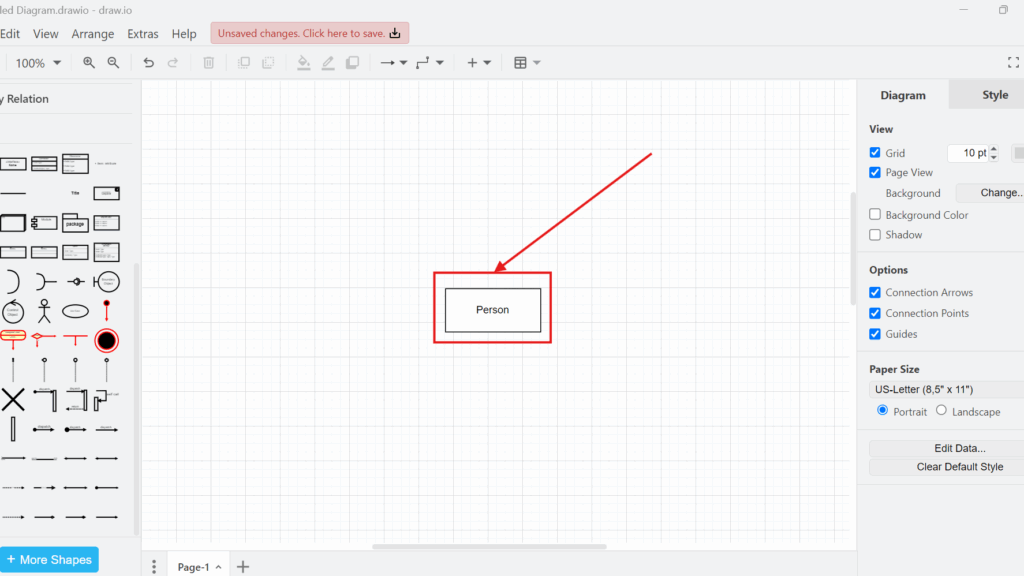
When I work with UML diagrams, I always pay close attention to the syntax and semantics of UML classes. They define how each element is structured and how it behaves within the model. Getting the syntax and semantics of UML classes right ensures that every diagram communicates clearly and accurately. This precision is vital in requirements modeling, where consistency and meaning turn abstract ideas into actionable system designs that teams can understand and build upon effectively.
Simple Representation of a Class
To begin with, let me explain the basic structure of a class in UML. A class is represented by a rectangle. Inside this rectangle, I write the class name.
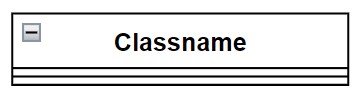
For example, if I’m working on a project that involves users, I might have a class named “Person”
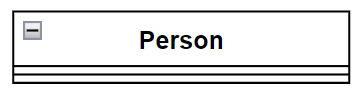
In fact using singular names is important. Why? Because a class is a template for multiple objects. For instance, the class name “Persons” would be incorrect. Instead, I would use “Person” to indicate the template for individual users.
Syntax and Semantics of UML Classes: A Broader View
Next, let’s dive a little deeper. A class diagram is more than just a collection of boxes with names. It’s about representing the structure and behavior of a system. For instance, when I work on a requirements model, I use a class diagram to simplify the data structure. In essence, the key nouns in the domain appear as classes. For example, if the requirements talk about customers, orders, and products, those terms would become classes like “Customer,” “Order,” and “Product.”
The distinction between an object and a class is undeniably important here. The class is the blueprint. It defines the structure and behavior. On the other hand, objects are instances of these classes. Let me clarify this with an example.
Example: Clarifying Syntax and Semantics with an Example
For instance, imagine I am developing a system that needs to display the data of a person. Let’s say my information model includes a class named “Person.” The requirement that states “the system must display the data of a person” means that the data for each object of the “Person” class should be displayed.
This brings me to the first task in modeling the information model. I need to identify the required classes based on the objects mentioned in the requirements. By doing this, I ensure that my UML class diagram aligns perfectly with the system’s needs. Read the article Unlocking the Power of Information Structure Modeling for an introduction into information models (opens in new tab).
Conclusion
In conclusion, getting the syntax and semantics of UML classes right is essential for effective modeling. By focusing on clear class names, understanding the difference between classes and objects, and using well-crafted diagrams, I can create models that not only meet requirements but also make the development process smoother and more efficient.
What’s Next?!
If I want to build a stronger UML class model, the next step is to learn how I identify the right classes. That is why I continue with Identifying Classes (1): A Heuristical Approach. In that article, I show how I use practical heuristics to find relevant classes in a structured way. As a result, I can move from vague domain ideas to clearer and more useful UML models.
Understand Requirements More Clearly Through Modeling
If I want to move beyond isolated requirement statements, I need models that make systems easier to see and explain. In the main article on Requirements Modeling, I explore essential Modeling Concepts, Process Modeling with BPMN, and the structural perspective of UML. Together, these topics help me visualize workflows, understand relationships, and describe complex systems with more clarity. Click through to see how Requirements Modeling helps me turn abstract requirements into structured, practical, and easier-to-communicate insights.
This article covers concepts that are also included in the CPRE certification syllabus.