
Ever launched a project only to spot major flaws late in development? I have, and it’s frustrating. That’s why Model Based Requirements Validation matters. It uncovers issues early by checking whether requirement models truly reflect stakeholder needs. This prevents costly mistakes, boosts collaboration, and improves software quality. It turns early insights into long‑term project success.
What Is Model Based Requirements Validation?
I use models to represent requirements in a structured form. Depending on the problem, I may model behavior, processes, states, interactions, data, or constraints.
I then compare the model with stakeholder needs and intended system use.
A model supports validation when it makes requirements easier to inspect, question, and confirm.
Validation asks whether I describe the right system. Verification asks whether the requirements and models are internally correct and consistent. In practice, I often perform both activities together.
What Do I Validate?
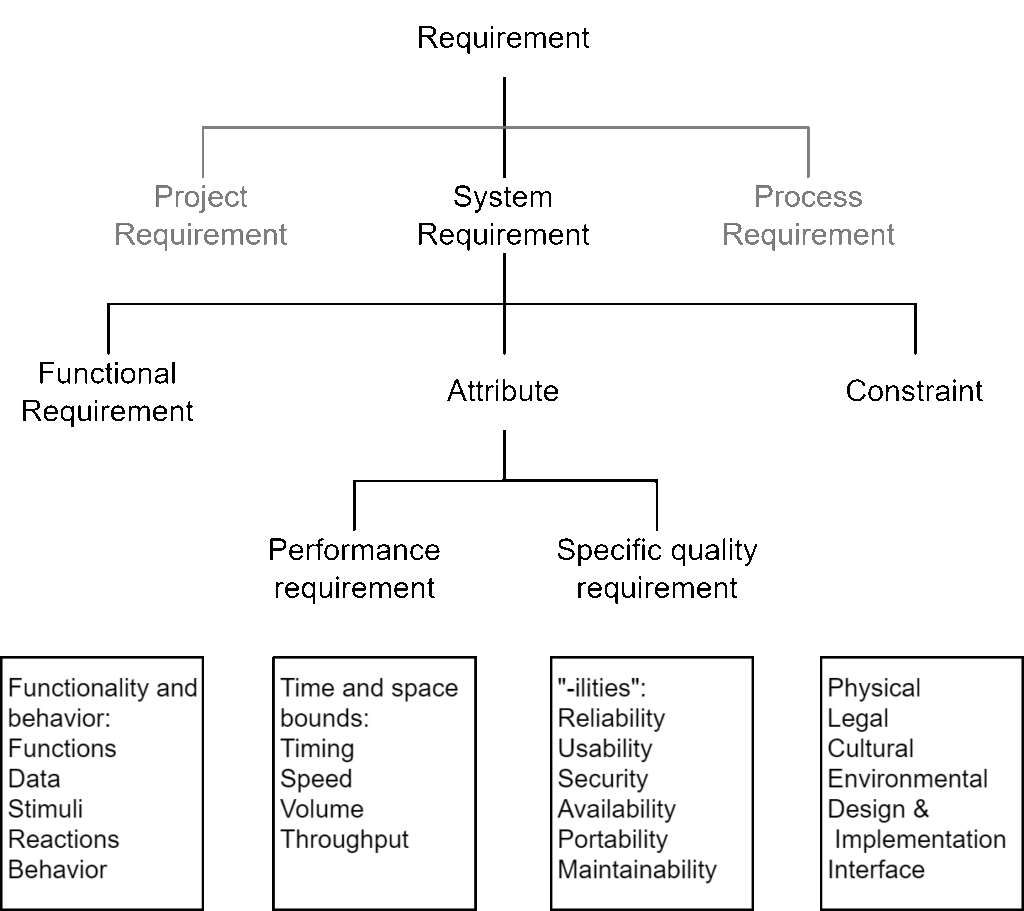
I do not focus only on functions. Instead, I consider several requirement dimensions.
I examine functionality and behavior, including functions, data, events, reactions, and expected results. In addition, I check timing and capacity, such as response time, speed, volume, and throughput.
I also consider quality requirements such as reliability, usability, security, availability, portability, and maintainability. Finally, physical, legal, cultural, environmental, interface, and implementation constraints may influence the solution.
A system can provide the correct function and still fail its requirements because it is too slow, insecure, unavailable, or unsuitable for its environment.
Which Models Do I Use?
I choose the model according to the question I need to answer.
Use case models help me examine goals and interactions between actors and the system. Activity diagrams or BPMN models help me analyze processes, responsibilities, decisions, and alternative paths.
State machines are useful when behavior depends on the current system state. Sequence diagrams help me examine interactions and interfaces between components. Domain or data models help me clarify terminology, information structures, and business rules.
I choose the model according to the validation problem, not according to my preferred notation.
How Do Models Reveal Requirement Defects?
Models force me to connect individual requirements.
As a result, I can detect missing paths, undefined reactions, contradictory rules, incomplete interfaces, impossible timing constraints, unclear states, missing decisions, and inconsistent terminology.
For example, a state machine may reveal an event without a valid transition. A process model may expose a missing decision path. A sequence diagram may show that one component requires information that another component never provides.
Therefore, modeling often reveals problems that remain hidden when I review requirements only as text.
A model does not remove ambiguity automatically. It makes ambiguity visible.
Executable Models and Testing
Some models can also be simulated or executed. This allows me to explore system behavior before the final system exists.
Moreover, sufficiently precise models can support the derivation or automatic generation of test cases. However, ordinary diagrams do not automatically become executable models.
The modeling language and tool must provide enough formal semantics.
I also distinguish model-based testing from requirements validation. Tests may confirm that an implementation behaves according to the model. However, they cannot prove that stakeholders wanted the modeled behavior.
A technically correct model can still describe the wrong system.
Therefore, stakeholder review remains essential.

Avoiding Over-Modeling
I do not model every requirement.
A simple requirement may need only a clear statement and an acceptance criterion. In contrast, models become valuable when I need to understand workflows, states, interfaces, timing dependencies, complex business rules, or several interacting requirements.
The model itself must also be correct. Therefore, I check for missing transitions, disconnected elements, undefined conditions, inconsistent terminology, impossible paths, and ambiguous decisions.
I create a model only when it provides more validation value than the effort required to create and maintain it.
Conclusion
Model Based Requirements Validation helps me turn complex requirements into structures that I can inspect and discuss.
Models expose relationships, assumptions, behavior, constraints, and exceptional situations that text can hide. They can also support stakeholder reviews, traceability, simulation, acceptance criteria, and model-based testing.
The purpose is not to create more diagrams. The purpose is to discover requirement defects before they become implementation defects.
What’s Next?!
Now that you’ve seen how Model Based Requirements Validation improves software quality, it’s time to explore the bigger picture. In my next article, Context Modeling in Requirements Engineering, I’ll show how understanding a system’s environment shapes better requirements. Discover how defining boundaries and external interactions builds a solid foundation for every project. Let’s continue uncovering how smart modeling leads to smarter systems.
Explore Requirements Engineering and Requirements Modeling
I use Requirements Engineering to turn scattered ideas into clear system direction. First, it helps me understand stakeholder needs through elicitation. Then, it supports structured documentation, practical validation, and reliable testing. Moreover, requirements management keeps changes under control, while system analysis helps me see the full solution context. Read the main article on Requirements Engineering to learn how these activities connect and how they help build better software with less uncertainty.
If I also want to see requirements in a more visual and structured way, I can continue with Requirements Modeling. There, I explore Modeling Concepts, Process Modeling with BPMN, and UML to understand how models improve communication, analysis, and system design.
Credits: Photo by Kindel Media from Pexels | Diagram by Manouk Sirag from Wikimedia Commons under the license Attribution-ShareAlike 4.0 International