Fred

Camunda Modeler diagram editor with a blank grid canvas, left-side shape palette, and a selected small circle element in the center with a floating context toolbar.

What is Camunda?

If you ask what is camunda, you are likely looking for a better way to automate business processes. Camunda helps teams model, run, and improve workflows with BPMN. As a result, you can streamline operations, reduce manual work, and create clearer processes across your organization.
What is Camunda? Read More »

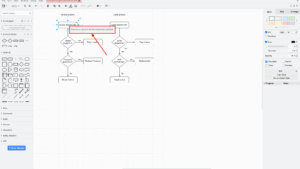
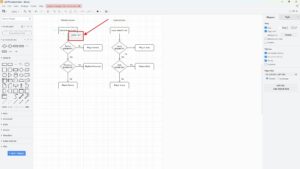
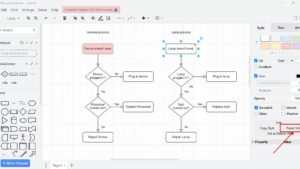
draw.io editor screenshot with two flowcharts (“General process” and “Lamp process”); “Lamp doesn’t work” is selected and “Paste Style” is pointed to by a red arrow.

Mastering Styles in Draw.io

Styles in draw.io can turn simple diagrams into clear and professional visuals. I use them to control colors, lines, text, and shape design. In this guide, I show how style management works and why it matters. As a result, you can make diagrams more consistent, engaging, and easier to understand.

Mastering Styles in Draw.io Read More »

BPMN Project Roles for Effective BPM

BPMN project roles are important when I want clear and useful process models. I learned early that BPMN is not only about symbols and flowcharts. It also depends on the people who create, review, and use the model. Therefore, understanding BPMN project roles helps me improve communication, avoid confusion, and support better process management across the whole business.

BPMN Project Roles for Effective BPM Read More »

Test Activities in Software Development

When I build software, I never just write code and hope it works. Testing is part of every stage. It helps me find issues, ensure quality, and deliver dependable results. But testing is more than bug hunting — it’s a structured cycle. I plan, design, execute, and document every step. These Test Activities in Software Development keep me organized, aligned, and efficient. No matter the project or industry, repeating them in each iteration guarantees continuous improvement and reliable outcomes.

Test Activities in Software Development Read More »

Limitations of Software Testing

When I develop software, testing serves as my guide toward stability, reliability, and user satisfaction. Yet, it’s important to remember its boundaries. Even the best testing can’t guarantee perfection or catch every bug. In this article, I’ll explain the limitations of software tests, why exhaustive testing is impossible, and how context determines what truly matters. Understanding these limits helps balance effort, risk, and quality to achieve the most effective testing outcomes possible.

Limitations of Software Testing Read More »

What is Debugging in Software Testing?

Debugging in software testing is the process of finding the root cause of a failure and fixing it. It goes beyond simply knowing something went wrong — it’s about understanding why. In this article, I’ll explain how debugging fits into the development cycle, how it connects with testing, and why both are essential for quality. Although testing detects issues and debugging resolves them, they work best together to ensure clean, reliable, and high-performing software every time.

What is Debugging in Software Testing? Read More »

Elicitation Through Effective Presentation: Insights from a Requirements Engineer

In my work as a Requirements Engineer and IT Business Analyst, I’ve learned that gathering requirements is only half the story. The real impact comes from how we share them. That’s where presentation requirements engineering comes in. It’s about turning complex information into clear, engaging communication that aligns everyone’s vision. When we combine strong presentation skills with sound engineering methods, we lay the foundation for successful, collaborative software projects.

Elicitation Through Effective Presentation: Insights from a Requirements Engineer Read More »

Cropped diagram showing “Objects” beneath a star, rectangular block, triangle, and circle inside part of a larger circular boundary.

Object Name, State, and Behavior in Object-Oriented Programming

In software development, I strive to model the real world effectively. One of my strongest tools is object orientation—it turns complex problems into clear, structured models. But first, we must ask: what defines an object? I focus on three key aspects—object name, status, and object behavior. These elements bring systems to life and make them understandable. In this article, I’ll share how I think about objects and use their behavior to design better, more realistic software systems.

Object Name, State, and Behavior in Object-Oriented Programming Read More »

Waterfall vs. Agile Testing: Which One Fits Your Project Best?

Choosing the right testing strategy can define a project’s success. I’ve seen both sides — times when everything follows a clear sequence and others when adaptability is key. That’s where the waterfall vs agile testing debate truly matters. In this article, I’ll compare both approaches, explain how they work, and show when to use each for maximum impact. Understanding their strengths and trade-offs helps ensure your testing process stays efficient, flexible, and aligned with project goals.

Waterfall vs. Agile Testing: Which One Fits Your Project Best? Read More »

Why Software Bugs Happen – And What We Can Do About It

Software development is never flawless — I’ve learned that through experience. No matter how precise we try to be, software bugs still find their way in. But what truly causes them, and how can we minimize their impact? In this article, I’ll uncover the main reasons behind software defects, from human errors to complex system interactions. I’ll also show how effective testing helps detect and resolve these issues early, preventing failures and ensuring more stable, reliable software products.

Why Software Bugs Happen – And What We Can Do About It Read More »

3 Ways to Read Nonverbal Conflict Signals in Requirements Elicitation

In the complex world of human interaction, understanding gestures and expressions is like decoding a hidden language. As a Body Language Requirements Engineer, I know communication goes far beyond words. Reading subtle signals helps me sense emotions, intentions, and unspoken conflicts. In my work as an IT Business Analyst, mastering body language is not just helpful — it’s essential for resolving misunderstandings and building trust during every phase of a project.

3 Ways to Read Nonverbal Conflict Signals in Requirements Elicitation Read More »

Why Test Software: A Practical Guide to Better Code

I always start a new project by asking one key question: Why test software? The answer may seem simple, but its impact runs deep. Testing does far more than just find bugs. It ensures reliability, security, and performance from the start. Through systematic testing, I can detect issues early, reduce risks, and deliver higher-quality products. In this article, I’ll explain why testing is essential and how it can completely transform the way we build and maintain software systems.

Why Test Software: A Practical Guide to Better Code Read More »

Software Testing Process: A Complete Guide

When I begin any project, I know quality never happens by chance — it’s carefully planned. That’s why the software testing process is so important. It’s not random clicking but a structured, methodical approach to ensure reliability. In this article, I’ll explain how I apply and refine the testing process, from validation to verification and beyond. You’ll see how effective testing uncovers defects early, safeguards quality, and keeps a client satisfied without wasting time or resources.

Software Testing Process: A Complete Guide Read More »

The Complete Test Concept Guide

When I start a new software project, I define my test concept early. It’s more than a habit—it’s a smart strategy that ensures structured, scalable, and reliable testing. Without a clear concept, even simple plans can collapse into confusion: test cases get lost, roles overlap, and bugs go unnoticed. In this article, I’ll explain how I design a complete test concept, what key chapters it should include, and how this structure builds the foundation for efficient and high-quality software testing.

The Complete Test Concept Guide Read More »

Scroll to Top
WordPress Cookie Plugin by Real Cookie Banner