
Fred

The Role of Body Language in Requirements Engineering

As a Requirements Engineer and IT Business Analyst, I must understand and express stakeholder needs clearly. Effective communication goes beyond spoken words. Body Language in Requirements Engineering helps me see the full picture in meetings, interviews, and analysis. Therefore, I can notice hidden signals, reduce misunderstandings, and improve requirements work with more awareness.

The Role of Body Language in Requirements Engineering Read More »

What Is Test Management? A Clear Guide for Modern Software Teams

When I first began working on software projects, I assumed testing happened only at the end. I quickly learned how wrong that was. True quality depends on planning and organization from the start. That’s why understanding what is test management is so important. It ensures testing is structured, efficient, and aligned with project goals. In this article, I’ll explain why test management matters, how it works in practice, and which tools can make the entire process more effective.

What Is Test Management? A Clear Guide for Modern Software Teams Read More »

Object-Oriented Thinking: What Are Objects?

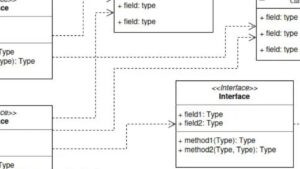
Object-oriented design has always fascinated me because it feels so natural and intuitive. Everything I encounter—whether physical or abstract—can be seen as an object with its own properties and behavior. That’s the real strength of this approach. It helps me divide complex systems into smaller, understandable units. In this article, I’ll guide you step by step through the idea of objects in object-oriented design and show how they shape clear, maintainable, and scalable solutions.

Object-Oriented Thinking: What Are Objects? Read More »

Object-Oriented Elicitation: Requirements in Complex Systems

When I begin a software project, I don’t just write code—I ask questions to understand the real world behind the system. This becomes crucial when I work in unfamiliar domains, like developing software for a dental clinic. In such cases, object-oriented elicitation is my key approach. It helps uncover, organize, and refine requirements for effective system design. By applying object-oriented elicitation, I can turn complex real-world details into clear, structured, and actionable models.

Object-Oriented Elicitation: Requirements in Complex Systems Read More »

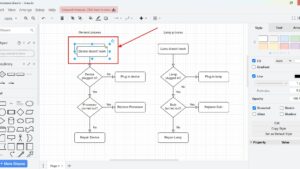
draw.io editor showing two flowcharts; the “Device doesn’t work” box is selected and outlined in red with a red arrow pointing at it.

How to Duplicate in draw.io

Duplicating saves time when I build diagrams in draw.io. It lets me reuse shapes, labels, and layouts without copying and pasting in separate steps. In this article, I explain How to duplicate in draw.io in a clear and practical way. You’ll learn how duplication works and why it helps you create diagrams faster, especially under tight deadlines.

How to Duplicate in draw.io Read More »

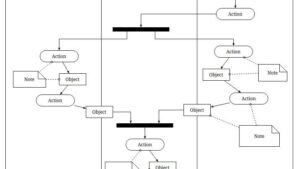
Cropped black-and-white diagram with vertical partitions showing “Action”, “Object”, and “Note” elements connected by arrows and thick black bars.

Object-Oriented Thinking: A Practical Approach to Modeling Complex Systems

Today, object-oriented thinking defines how we design systems and build software. I use it every day and see its importance growing. From Java to C++, this mindset shapes how modern applications work. But object-oriented thinking goes far beyond coding—it changes how we analyze problems and model real-world scenarios. In this article, I’ll explain what object-oriented thinking really means, why it matters, and how it helps create smarter, more adaptable systems.

Object-Oriented Thinking: A Practical Approach to Modeling Complex Systems Read More »

The Agile Mindset

What is the agile mindset? It is a flexible way of thinking that values learning, collaboration, and quick adaptation. I use it to help teams respond to change with more confidence. Therefore, the agile mindset improves teamwork, supports creativity, and encourages continuous growth in fast-moving project environments.

The Agile Mindset Read More »

Mastering Argumentation: A Requirements Engineer’s Guide

As a Requirements Engineer and IT Business Analyst, I constantly explore new areas to strengthen my understanding and practical skills. One field that has deeply enriched my work is argumentation. Though my main focus is on analyzing and documenting requirements, I’ve realized that mastering Requirements Engineering Argumentation is essential. It helps me communicate clearly, handle stakeholder conflicts, and guide projects with logic, confidence, and mutual understanding.

Mastering Argumentation: A Requirements Engineer’s Guide Read More »

What Are User Stories?

What are user stories in agile development? They are short descriptions of what users need and why it matters. I use them to connect user goals with practical development work. Therefore, teams can discuss value, clarify expectations, and plan better features. As a result, user stories improve collaboration and help agile teams deliver useful products.

What Are User Stories? Read More »

Agile Roles: Who Does What?

Agile roles help teams understand who does what in an agile project. Clear responsibilities improve communication, focus, and productivity. Therefore, each role supports teamwork, decisions, and delivery in a specific way. In this article, I explain the main agile roles and show how they help teams deliver successful results.

Agile Roles: Who Does What? Read More »

Programs in Project Management

Programs in project management help organizations coordinate related projects under one shared goal. Instead of managing each project in isolation, I can connect dependencies, resources, risks, and benefits. Therefore, programs create better alignment and stronger control. As a result, teams can reach strategic goals faster, use resources more efficiently, and create greater business value.

Programs in Project Management Read More »

Agile Methods Guide

From my experience, agile methods have completely changed how projects are managed. They make it easier to adapt to change, stay efficient, and deliver value faster. In this article, I’ll explain the most common agile methods and show how you can apply them in your own projects. Together, we’ll explore which approach fits your team best and how agile helps you achieve consistent, successful results.

Agile Methods Guide Read More »

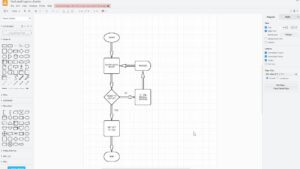
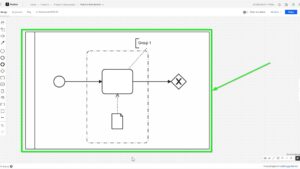
Modeler canvas with a highlighted large rectangle containing a start circle, a rounded task, a dashed “Group 1,” and a diamond with an X.

How to Use BPMN Elements in Camunda

Understanding business processes can feel complex at first. However, the right tool makes them easier to model and explain. In this guide, I walk you through the BPMN core elements with Camunda. You will learn how events, tasks, gateways, and flows work together. As a result, you can create clearer process models and build a stronger BPMN foundation.

How to Use BPMN Elements in Camunda Read More »

Scroll to Top
WordPress Cookie Plugin by Real Cookie Banner