
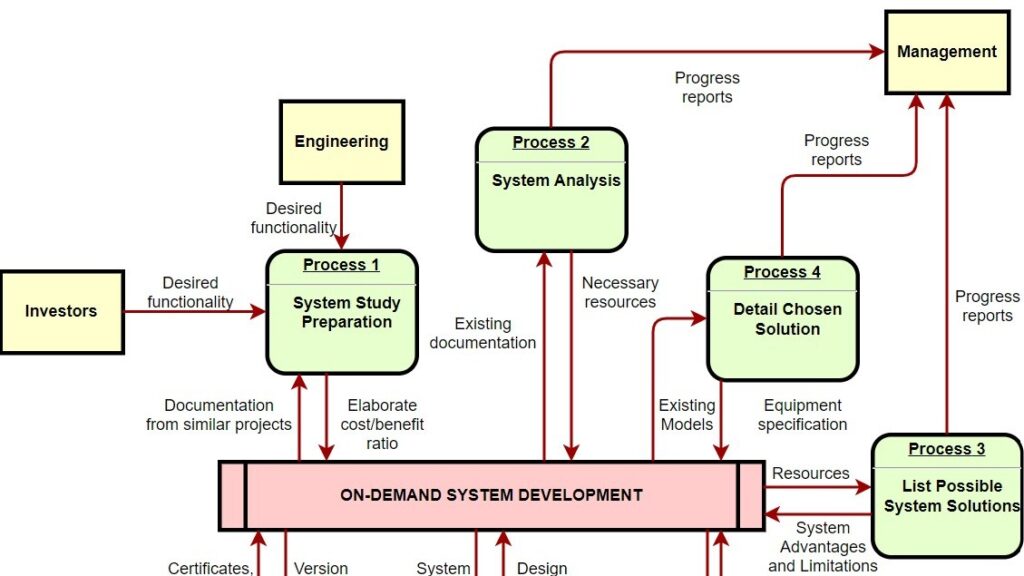
A key challenge in requirements engineering and IT business analysis is understanding the full system context. It’s not just about the software being developed but also about how it interacts with surrounding systems. Knowing their roles, dependencies, and operational environments is essential for defining precise requirements. Effective context modeling helps capture these relationships clearly, ensuring alignment between business needs, technical design, and real-world system behavior.
What is Requirements modeling
Requirements modeling is the structured process of representing stakeholder needs, system goals, and constraints using visual or formal models. In requirements engineering and IT business analysis, it serves as a bridge between abstract ideas and concrete system specifications. By using diagrams, structured notations, or models like UML and BPMN, I can clarify complex requirements, identify gaps, and ensure all stakeholders share the same understanding. Effective requirements modeling helps transform business needs into precise, testable, and implementable system requirements.
What Is Context Modeling?
Context modeling describes the environment in which a system operates.
I use it to identify:
- the system under development
- the system boundary
- people and roles
- neighboring IT systems
- hardware and equipment
- external data sources
- interfaces and data flows
Context modeling shows what surrounds a system, what belongs to the system, and how the system interacts with its environment.
It is one part of requirements modeling. While requirements modeling can describe processes, behavior, states, data, and interactions, context modeling focuses on scope and external relationships.
Why Does System Context Matter?
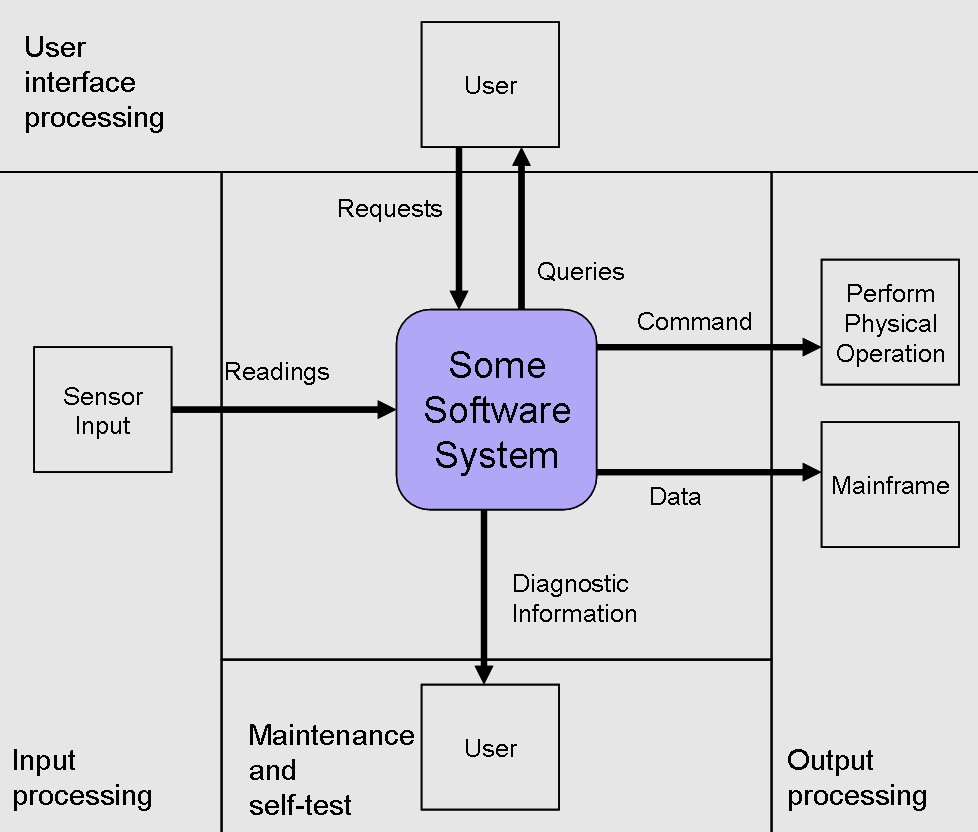
A system never works in isolation.
Users interact with it. Other systems exchange data with it. External services provide functionality. Devices can send information or receive commands.
Each interaction can create requirements.
For example, an e-commerce system may interact with customers, a payment provider, and an inventory system. The payment connection creates interface requirements. The inventory connection creates requirements for stock information. Customer interaction creates requirements for the user interface and system behavior.
External interactions often create system requirements. Therefore, I need to understand the context before I can specify the system completely.
Defining the System Boundary
The system boundary separates the system under development from its environment.
Everything inside the boundary belongs to my scope. Everything outside belongs to the context.
This distinction sounds simple, but it has major consequences.
For example, a payment provider can remain outside my system boundary even if my system depends on it. I do not specify how the provider works internally. However, I must specify how my system communicates with it.
Therefore, context modeling helps me answer two basic questions:
- What belongs to the system?
- What does the system interact with?
A clear boundary prevents me from mixing system requirements with assumptions about external systems.
What Is a Context Diagram?
A context diagram visualizes the system context.
I normally place the system at the center. Then I place relevant external entities around it. Finally, I connect them through interfaces or data flows.
A useful context diagram contains three core elements:
- The system under development
- External entities
- Interfaces or data flows
External entities can include people, roles, software systems, hardware, equipment, databases, or other communication partners.
The interfaces show what crosses the system boundary.
A context diagram gives me a high-level view of scope and external interaction without describing the internal system design.
Interfaces and Data Flows
Interfaces are central to context modeling.
I often identify them by asking what information enters and leaves the system.
For example, an e-commerce system may send payment data to a payment provider. The provider may return a payment result.
This immediately raises further questions:
What data does the system send? What does it receive? When does the exchange happen? What happens if the external system fails?
These questions often lead directly to new requirements.
Every relevant interaction across the system boundary can become a source of additional requirements.
Which Notation Should I Use?
I do not need one specific notation for context modeling.
A classic context diagram often resembles a high-level data flow diagram. I can use simple boxes or other shapes for the system and its external entities. Arrows then show incoming and outgoing information.
I can also use suitable UML diagrams, such as use case or component diagrams.
Even a structured table can work if it clearly captures the system, external entities, and interfaces.
Therefore, notation is secondary.
The model succeeds when the system boundary, communication partners, and interactions are clear.
How I Create a Context Model
I use a simple process.
Step 1: Define the System
First, I name the system that I want to analyze.
The name must be clear enough that all stakeholders understand what it includes.
Step 2: Define the Boundary
Next, I decide what belongs inside the system and what remains outside.
This defines the scope.
Step 3: Identify External Entities
Then I identify all relevant communication partners.
I look for users, roles, neighboring systems, hardware, equipment, and external data sources.
Step 4: Identify Interfaces
After that, I determine how each external entity communicates with the system.
I examine incoming and outgoing information.
Step 5: Name the Flows
I label important inputs and outputs clearly.
Unnamed arrows often indicate that I do not yet understand the interaction well enough.
Step 6: Validate the Model
Finally, I review the context with stakeholders.
I ask whether important actors, systems, interfaces, or dependencies are missing.
I consider the context model useful when I can explain who interacts with the system and what crosses the system boundary.
Context Modeling Helps Me Find Missing Requirements
A context model is not only documentation. It is also an analysis tool.
Every external entity gives me a starting point for further questions.
What does it send? What does it receive? Which conditions control the interaction? What happens if communication fails? Which properties of the external system affect my system?
These questions can reveal missing requirements very early.
For example, identifying a payment provider is not enough. I still need to define payment requests, responses, errors, timeouts, and other relevant conditions.
The context model gives me a map for deeper requirements elicitation.
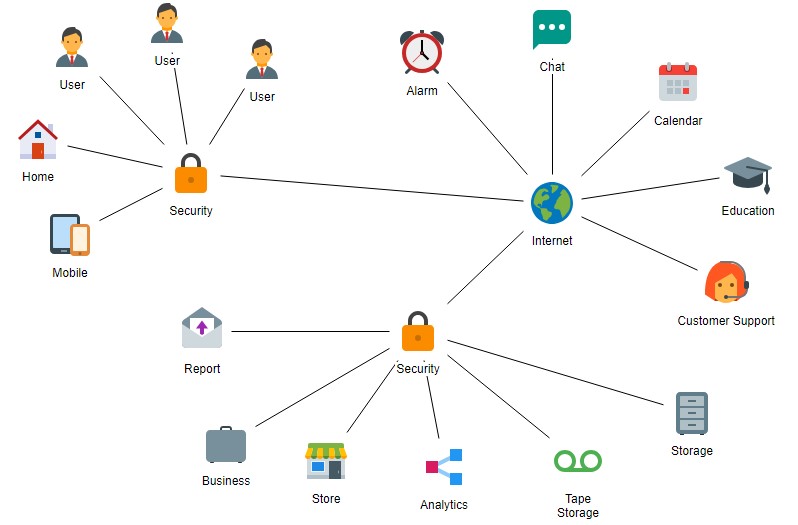
Context Modeling Improves Communication and Risk Analysis
A context model also gives stakeholders a shared view.
Business stakeholders can see relevant roles and neighboring systems. Developers can identify interfaces. Testers can see external interactions that require validation.
At the same time, the model exposes dependencies.
A system may depend on data from another application. An external service may become unavailable. A neighboring system may not provide the required information.
If I identify these dependencies early, I can address them before they become implementation problems.
Context modeling improves communication because it makes system scope and external dependencies explicit.
Keep the Context View Focused
I keep the context model separate from detailed internal design.
The context model answers:
- What surrounds the system?
- Who interacts with it?
- What crosses the boundary?
It does not normally explain internal workflows, detailed business rules, component structures, or implementation logic.
I use other requirements models for those questions.
This separation keeps the context view readable.
The context model explains how the system fits into its environment, not how the system works internally.
Common Context Modeling Mistakes
Context modeling becomes less useful when I overload the diagram or define the scope incorrectly.
Typical problems include:
- missing external entities
- unnamed interfaces
- unclear data flows
- mixing internal components with external systems
- showing too much implementation detail
- unclear system boundaries
Therefore, I keep the model high-level and validate it with relevant stakeholders.
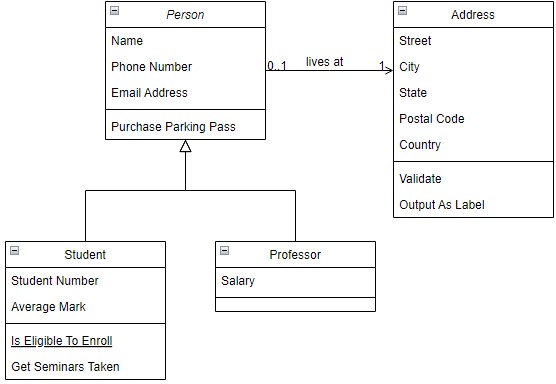
Why Context Modeling Matters
Context modeling gives me the foundation for understanding a system before I describe its details.
I define the boundary. I identify users, neighboring systems, hardware, and other external entities. Then I examine the interfaces between them and the system.
As a result, I understand where requirements originate and which external dependencies influence the system.
Context diagrams make this structure visible. They support scope definition, interface analysis, requirements elicitation, communication, validation, and early risk detection.
If I understand the system context first, I can define the system itself more precisely.
That is why context modeling is a fundamental part of requirements engineering.
What’s Next?!
Now that you understand what requirements modeling is and why it plays such a vital role in IT business analysis, it’s time to take the next step. Static models show structure — but dynamic views bring systems to life. They reveal how components interact over time and how processes actually flow. Curious to see how that works? Dive into my next article, “Requirements Modeling with Dynamic Views,” and explore how motion and interaction turn requirements into real understanding.
Discover the Value of Requirements Modeling
If I want to understand requirements more clearly, I need more than plain text. I need models that show structure, flow, and relationships in a way that is easy to discuss. In the main article on Requirements Modeling, I explore essential Modeling Concepts, Process Modeling with BPMN, and the structural view of UML. As a result, I can connect business needs with system logic more effectively. Click through to see how Requirements Modeling helps me analyze, communicate, and design with greater clarity.
This article covers concepts that are also included in the CPRE certification syllabus.