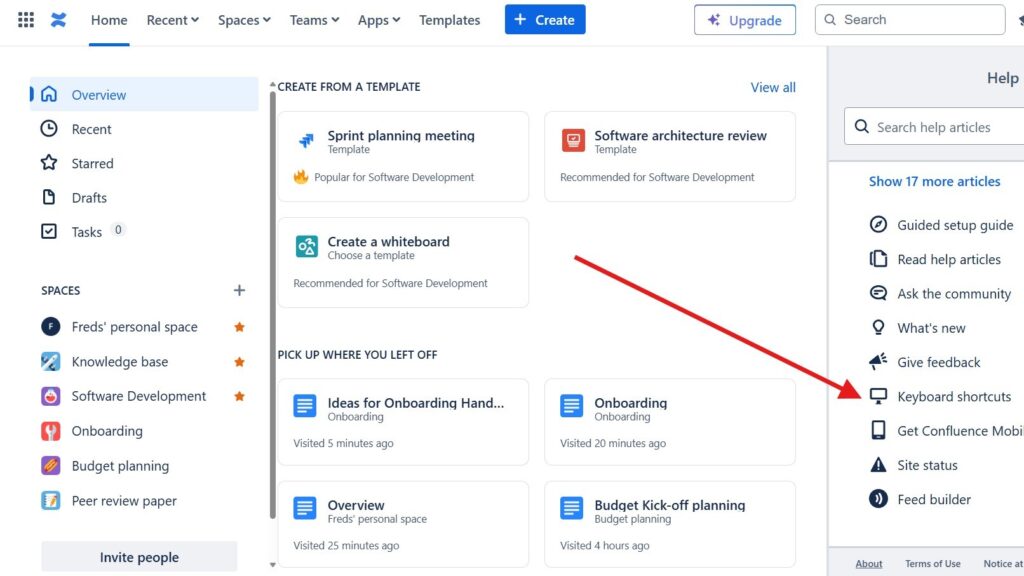
Blank page editor with the placeholder text “Give this page a title,” marked by red arrows.

How to Create a Confluence Page

Learning how to create a Confluence page is easy, but a few tips make the process smoother. I use Confluence to document projects, coordinate teams, and structure knowledge clearly. Therefore, a good page needs more than text. It needs purpose, order, and readability. In this guide, I show you how to create useful pages and improve collaboration.

How to Create a Confluence Page Read More »

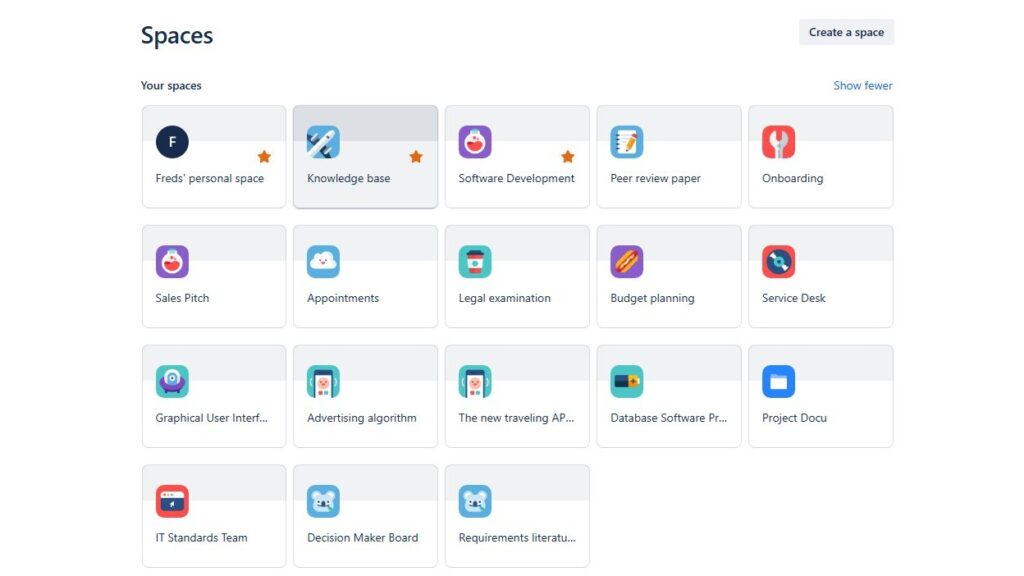
“Spaces” overview grid showing multiple space tiles such as “Freds’ personal space,” “Knowledge base,” “Software Development,” and “Onboarding.”

Spaces in Confluence

In this introduction to confluence spaces, I explain how spaces help teams organize work in Confluence. Spaces give each project, team, or topic a clear home. As a result, I can create, share, and manage content with less confusion. They support better structure, smoother collaboration, and easier access to important knowledge.

Spaces in Confluence Read More »

Requirements Determination from Existing Systems: A Key to Successful Software Development

In today’s software world, clear documentation of what people need is crucial. Yet, we often overlook old systems and past solutions that still hold valuable insights. These legacy systems can reveal what works well and what causes trouble. By studying them, we gain ideas that improve new projects. In this article, you’ll learn more about requirements determination from existing systems and how it leads to smarter software development.

Requirements Determination from Existing Systems: A Key to Successful Software Development Read More »

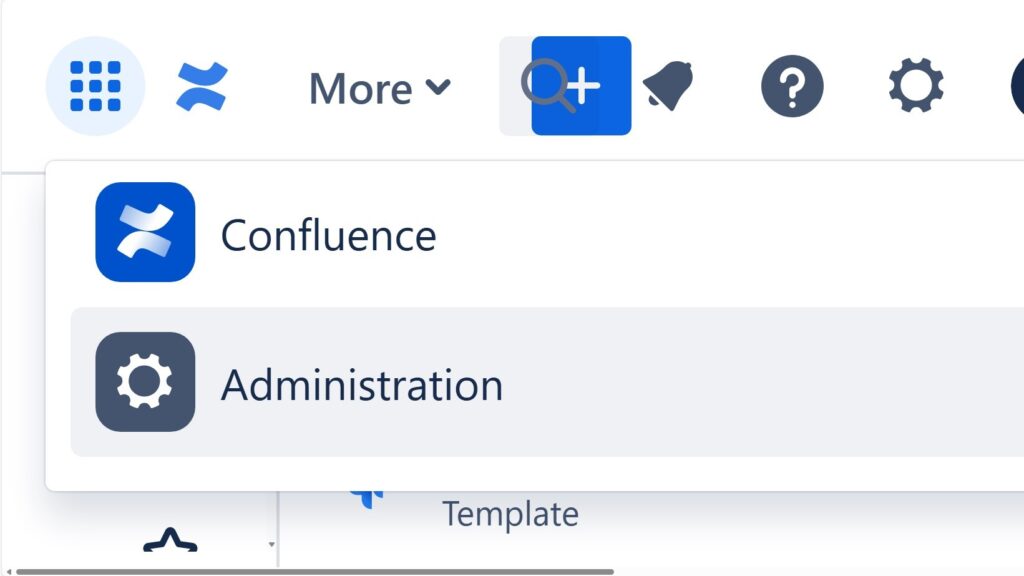
Cropped dropdown/menu showing “Confluence” and “Administration,” with “Administration” highlighted.

The Power of Confluence

The power of confluence lies in how it connects people, projects, and knowledge in one clear workspace. I use it to organize documentation, support collaboration, and manage tasks with less friction. As a result, teams reduce scattered information, improve transparency, and work with better focus from idea to delivery.

The Power of Confluence Read More »

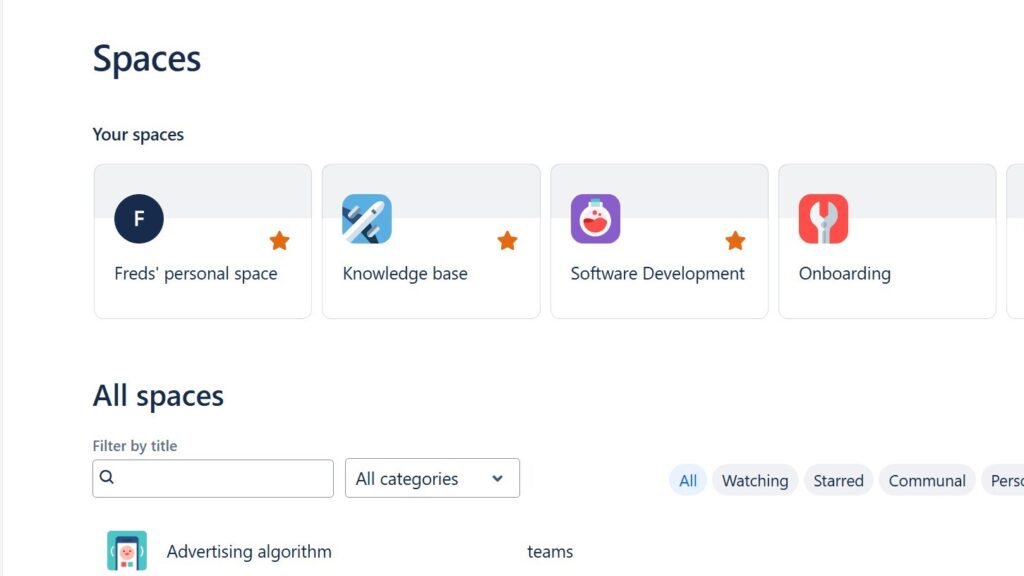
Confluence “Spaces” page showing “Your spaces” cards (Freds’ personal space, Knowledge base, Software Development, Onboarding) and an “All spaces” filter area.

How to Create a Space in Confluence

Learning how to create a Space in Confluence helps me organize team content with clarity. A space works as a home for related pages, projects, departments, or topics. As a result, I can structure information, reduce confusion, and support smoother collaboration. In this guide, I show you the steps to set up a useful Confluence space.

How to Create a Space in Confluence Read More »

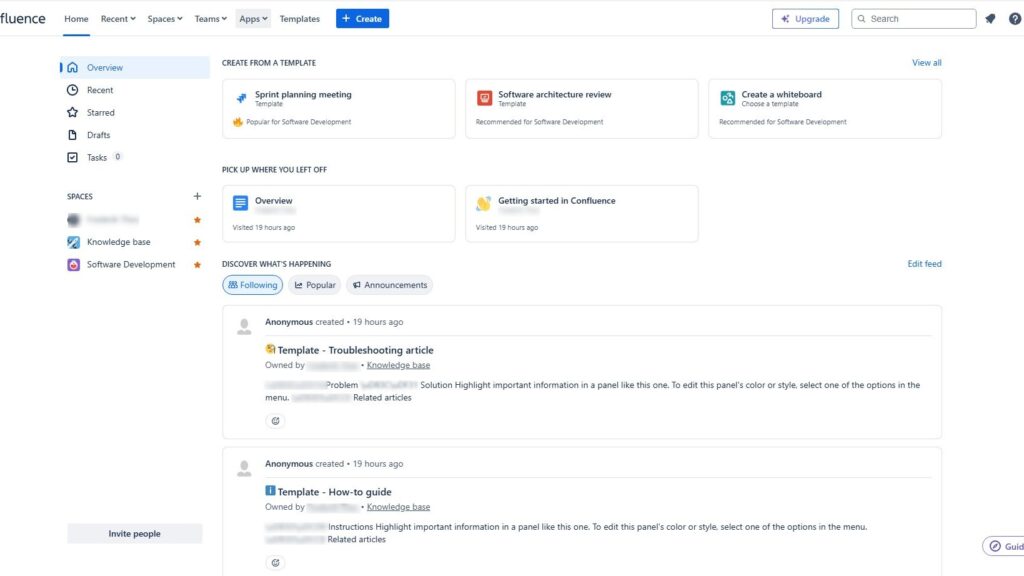
Confluence home dashboard with left navigation (Overview, Recent, Starred, Drafts, Tasks), template cards at the top, and an activity feed below.

The Confluence Dashboard

This introduction confluence dashboard guide shows the dashboard as your central workspace. It helps you find updates, key information, spaces, pages, and navigation in one place. As a result, teams stay aligned and new members get a clear first impression. A well-structured dashboard supports better collaboration from the start.

The Confluence Dashboard Read More »

Stakeholder Management in Requirements Engineering: Clear Responsibilities and Effective Communication

Successful projects depend on smooth teamwork. A key element in this process is requirements engineering, which bridges what people want with how the project is executed. By applying it, we can gather needs, understand them, and turn them into clear, actionable plans. These plans act as a guide for success. In this article, you discover how stakeholder management in requirements engineering, effective communication, and clear responsibilities help achieve better outcomes.

Stakeholder Management in Requirements Engineering: Clear Responsibilities and Effective Communication Read More »

Effective Communication in Requirements Engineering for Successful Projects

In today’s fast-paced business world, projects only succeed when the right people stay connected and share information. Clear dialogue ensures that everyone involved understands goals and avoids costly misunderstandings. Stakeholders play a crucial role in shaping outcomes through their input and feedback. This article explores how their involvement drives results, with a focus on effective communication in requirements engineering as the key to project success.

Effective Communication in Requirements Engineering for Successful Projects Read More »

Conflict Resolution in the Requirements Process for Project Success

When running a project, keeping everyone aligned is essential. Stakeholders influence success and shape outcomes. To manage them well, we apply stakeholder relationship management. It builds trust, improves understanding, and reduces friction. Strong collaboration ensures smoother progress and better results. In this article, you discover how effective stakeholder relationship management supports conflict resolution in the requirements process.

Conflict Resolution in the Requirements Process for Project Success Read More »

Stakeholder Lists in the Requirements Engineering of Complex Projects

In business projects, many people are involved, and they are called stakeholders. These can be customers, suppliers, team members, or even people from the community. Each has a role that influences success. To keep track, we need clear lists of all important stakeholders. They help us avoid gaps, manage expectations, and build alignment. This article explains why stakeholder lists in requirements engineering are essential for guiding complex projects and achieving better outcomes.

Stakeholder Lists in the Requirements Engineering of Complex Projects Read More »

Understanding Users with Personas in Software Projects

In software development, success depends on knowing what people want and need. This work is part of requirements engineering, where we gather and analyze user demands. Developers and teams must deeply understand users to create the right solutions. That’s why personas matter. They represent real user goals and challenges. This article explores how Understanding Users with Personas supports complex projects and leads to better results.

Understanding Users with Personas in Software Projects Read More »

Personas in Requirements Engineering and IT business analysis

When we build computer programs, they must fit the needs of the people who use them. Yet, it is often hard to speak with every future user directly. To solve this, we use imaginary but realistic characters that represent typical users. These characters help us understand goals, behaviors, and expectations. They make requirements clearer and more user-focused. In this article, you discover more about personas in requirements engineering.

Personas in Requirements Engineering and IT business analysis Read More »

Documents and People for the Systematic Identification of Stakeholders in Requirements Engineering

In software or product development, success relies on recognizing the right people and documents. Including everyone who matters is essential, as their needs and expectations shape the outcome. To prevent misunderstandings and ensure satisfaction, we must identify them clearly. Both people and papers guide this process. This article explains the systematic identification of stakeholders, a crucial step to achieve clarity, alignment, and shared understanding in any project.

Documents and People for the Systematic Identification of Stakeholders in Requirements Engineering Read More »

Scroll to Top
WordPress Cookie Plugin by Real Cookie Banner