
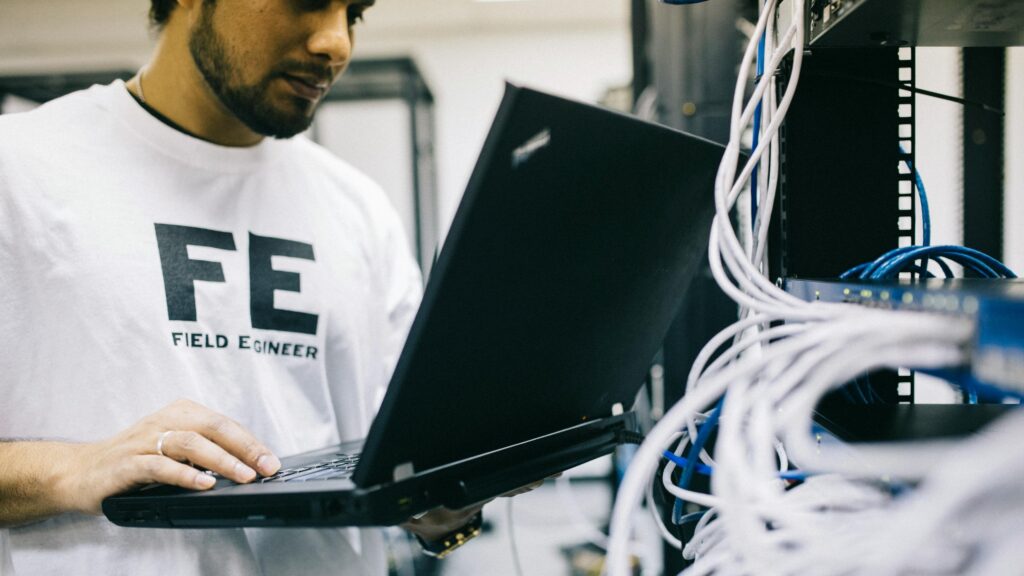
In recent years, IT systems have become vital for how businesses, governments, and society work. They handle key functions that keep everything running smoothly. But how can we make sure they perform at their best? The answer lies in understanding how to plan, define, and manage what these systems must do. In this article, you’ll learn more about Requirements Engineering and IT Business Analysis in IT Systems and how it ensures smooth, reliable operations.
Why Requirements Engineering Matters in IT Systems
An IT system rarely consists of software alone. It can include applications, databases, interfaces, infrastructure, external services, users, and business processes. Therefore, I first examine the system in its wider context.
A technically correct application can still fail if it does not support the right business process. Likewise, a feature can work perfectly while solving the wrong problem.
I judge an IT system by whether it satisfies real needs, not only by whether its software works.
This is why requirements engineering matters. It helps me clarify what stakeholders need before development turns assumptions into expensive solutions.
To explore how storytelling can strengthen this communication and make complex requirements easier to understand, read also The Power of Storytelling in Requirements Engineering.
What Requirements Engineering Means to Me
I use requirements engineering to identify, analyze, document, validate, and manage requirements.
However, stakeholders rarely provide complete requirements. They describe problems, wishes, constraints, or possible solutions. Different stakeholders may also expect different results.
Therefore, I do more than collect statements. I ask questions, examine existing systems, analyze processes, review documents, and compare stakeholder perspectives.
Requirements engineering turns incomplete and sometimes conflicting information into a reliable basis for decisions.
A requirement may describe functionality, quality, data, interfaces, business rules, security, legal constraints, or operational conditions. Together, these requirements define what the system must achieve and under which conditions it must operate.
I Start With the Need, Not the Proposed Solution
Stakeholders often describe solutions before explaining the underlying problem.
For example, someone may say, “We need a dashboard.” I would first ask what decision the dashboard should support. Perhaps managers actually need earlier information about delayed orders.
This distinction matters. If I understand the need first, I can evaluate several possible solutions instead of committing too early to one design.
Understanding the problem before defining the solution preserves options and reduces unnecessary development.
I Identify the Relevant Stakeholders and Sources
Requirements come from many places. Therefore, I identify not only users and customers, but also business departments, developers, architects, operations teams, security specialists, management, external partners, and regulators.
I also examine other requirements sources. These may include:
- existing IT systems
- process models
- contracts and regulations
- support tickets
- reports and procedures
- interfaces and APIs
- data structures
- system documentation
Different sources reveal different parts of the problem. For example, users know their daily work, while existing systems may contain important behavior that nobody mentions because it has become routine.
Therefore, I combine several sources instead of relying on one perspective.
I Elicit and Analyze Requirements
I choose elicitation techniques according to the situation. Interviews help me understand individual perspectives. Workshops help stakeholders compare expectations. Observation shows me how work actually happens. Prototypes can clarify uncertain needs.
Afterwards, I analyze the results.
I look for missing information, contradictions, assumptions, dependencies, and vague terms. I also distinguish between different types of requirements.
For example, the statement “Customers can upload documents” describes a function. However, the system may also need requirements for file formats, size limits, malware protection, storage, authorization, retention, and performance.
A simple feature often depends on several less visible requirements.
This analysis helps me uncover complexity before it appears during implementation.
I Make Requirements Clear and Verifiable
Requirements must support communication. Therefore, I avoid vague terms such as fast, intuitive, secure, flexible, or user-friendly unless I define what they mean.
Instead of saying that a search function must be fast, I define an acceptable response time under specific conditions. Likewise, instead of stating that only authorized users may access information, I identify which roles may access which data.
However, I also avoid unnecessary detail. Requirements should contain enough information to support decisions, implementation, and testing without becoming excessive documentation.
A useful requirement is clear enough that different people can understand it consistently and determine whether the final system satisfies it.
I Resolve Conflicts and Validate the Result
Stakeholders often have competing interests.
For example, a business unit may want to collect more customer data, while data protection specialists may want to minimize it. Users may want flexibility, while operations teams prefer standardization.
I make these conflicts visible. Then I examine goals, risks, priorities, constraints, and possible alternatives.
In addition, I validate requirements with stakeholders. I use reviews, examples, scenarios, process models, or prototypes to check whether the requirements describe the intended result.
This step matters because developers can implement an incorrect requirement perfectly.
Early validation helps me discover misunderstandings before they become expensive software changes.
I Manage Requirements When the System Changes
Requirements do not remain static.
Business priorities change. Regulations evolve. Users learn from prototypes. Technical constraints emerge. New interfaces appear.
Therefore, I manage requirements throughout the lifecycle. When something changes, I examine why it changed and which other elements depend on it.
For example, a change to authentication may affect user interfaces, APIs, security controls, testing, support, and documentation.
This relationship between requirements and other system elements becomes especially important in complex IT environments.
Requirements Engineering and IT Business Analysis
I see strong overlap between requirements engineering and IT business analysis.
Business analysis often starts with the broader business problem. It examines goals, processes, stakeholders, value, and possible solutions. Requirements engineering then focuses more closely on defining, analyzing, validating, and managing the requirements for the resulting system or change.
In practice, I often combine both perspectives.
For example, I may first analyze why a business process should change. Then I identify what information and functions the new process needs. Finally, I derive requirements for the supporting IT systems.
Therefore, I do not treat the two disciplines as competitors. They complement each other.
Requirements Engineering Supports the Full System Lifecycle
Requirements do more than guide developers.
Architects use them to make design decisions. Testers use them to derive test conditions. Business stakeholders use them to evaluate the result. Operations teams need requirements for availability, monitoring, backup, recovery, security, capacity, and support.
Therefore, requirements engineering connects business needs with development, verification, and operation.
The main result of requirements engineering is not a large document but a shared and sufficiently precise understanding of what the system must achieve.
Documentation preserves that understanding and makes it usable throughout the lifecycle.
What Happens When Requirements Engineering Is Weak?
Weak requirements create uncertainty.
Teams interpret needs differently. Important stakeholders enter too late. Hidden constraints emerge during development. Tests confirm functionality without confirming business value. Changes become difficult to assess because dependencies remain unclear.
The result can be rework, delays, conflicts, higher costs, or systems that function technically but fail to solve the intended problem.
Requirements engineering cannot remove every project risk. However, it reduces risks caused by unclear needs, missing information, conflicting expectations, and uncontrolled change.
Why Requirements Engineering Remains Essential
Modern IT systems connect people, processes, applications, data, infrastructure, and external services. As a result, both technical and organizational complexity continue to grow.
I use requirements engineering to bring structure to this complexity. It helps me understand needs, clarify system boundaries, identify dependencies, resolve conflicts, and manage change.
Requirements Engineering in IT Systems creates the disciplined connection between a business need and an IT solution that can satisfy it.
For that reason, I consider it a core capability for successful IT projects, digital products, services, and system development.
What’s Next?
Now that you understand what an achieved resolution result means in requirements engineering and IT business analysis, it is time to look more closely at the people behind every requirement. Resolving conflicts helps align goals. However, clear requirements also depend on knowing which stakeholders matter, how they influence the project, and which perspectives must not be missed. To explore this further, continue with the systematic identification of stakeholders.
Build Direction Before Development Starts
Continue with Requirements Engineering to understand how initial ideas become clear, structured, and achievable software goals. It shows how strong requirements align stakeholders, reduce uncertainty, and support better decisions from the start. As a result, you can see how requirements engineering helps teams create software with purpose, focus, and real value.
Credits: Photo by Field Engineer from Pexels