

All Management Articles

This page presents requirements management articles. Requirements management documents and analyzes. It traces, prioritizes, and agrees. Stakeholders gain clear shared understanding. This foundation enables project success. Requirements align with business objectives. They remain feasible and testable. Ongoing monitoring controls evolving requirements. Approved changes prevent scope creep. Robust practices improve product quality. They ensure predictable project outcomes.

Project Schedules: A Critical Element of Successful Project Management

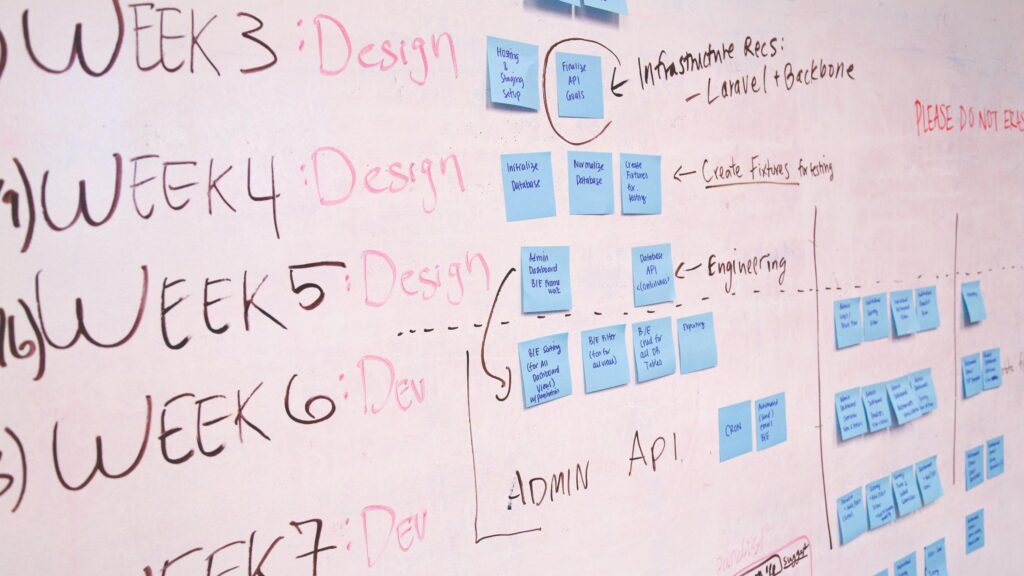
Project schedules for successful project management help me plan work, time, and resources clearly. A strong schedule shows tasks, deadlines, dependencies, and milestones. Therefore, teams can stay organized, avoid delays, and track progress more easily. As a result, projects have a better chance to finish on time, within budget, and with clear direction.

Project Schedules: A Critical Element of Successful Project Management Read More »

ITIL Service Operation

When I think about ITIL Service Operation, I see the backbone of IT service management. It turns planning, design, and strategy into daily service delivery. Its goal is clear: deliver agreed service levels to users and customers. At the same time, it helps me manage the applications, technology, and infrastructure that keep those services running.

ITIL Service Operation Read More »

Workflow diagram where three “Ask Friend” tasks merge into a diamond gateway with an asterisk symbol, highlighted by a red box and arrow.

BPMN Complex Gateways Explained: Rules and Use Cases

Complex gateways in BPMN can seem difficult at first. I felt the same when I started modeling advanced process logic. However, once I understood them, I saw how useful they are for special routing situations. In this article, I explain complex gateways in BPMN in a clear way, show when they make sense, and help you understand how to model more demanding process behavior with confidence.

BPMN Complex Gateways Explained: Rules and Use Cases Read More »

Cropped decision flow labeled “Desired drink?” with diamond “X” gateway branching to “Order water,” “Order Cocktail,” and “Order coffee,” then rejoining.

BPMN Exclusive Gateways Explained: Rules and Decision Logic

Exclusive gateways in BPMN 2.0 help me model clear decision paths in a process. They show that only one path continues after a condition is checked. Therefore, they are useful when I want to make business rules easy to understand. In this article, I explain exclusive gateways in BPMN 2.0 with a simple example so I can show how they work in practice and why they improve process clarity.

BPMN Exclusive Gateways Explained: Rules and Decision Logic Read More »

Close-up of a rounded rectangle labeled “Buying medicine” with an incoming arrow from the left and outgoing arrow to the right.

BPMN Elements Explained: Events, Activities, Gateways, and Sequence Flows

BPMN core elements can look complex at first. I felt the same when I started. However, once I understood the basics, process modeling became much easier. BPMN core elements help me describe events, tasks, and sequence flows in a clear and structured way. As a result, I can build process diagrams that are easier to read, explain, and improve.

BPMN Elements Explained: Events, Activities, Gateways, and Sequence Flows Read More »

Partial diagram showing a start circle connected by an arrow to an unlabeled rounded rectangle near a dashed boundary line (cropped view).

Process Fundamentals: Core Concepts for Clear Business Workflows

Have you ever looked at a process diagram and felt lost? I know that feeling well. Business workflows can seem simple, but they often hide complex details. That is why process basic concepts matter. Once you understand the foundation, every process becomes easier to follow. In this article, I explain the key ideas that help you read workflows, see structure, follow flow, and spot problems early.

Process Fundamentals: Core Concepts for Clear Business Workflows Read More »

Partial diagram with a dashed group boundary labeled “Group 1,” an unlabeled rounded rectangle, and an arrow leading to a diamond with an “X.”

Participants in BPMN: How Pools Define Process Responsibility

The participant perspective in BPMN changed how I understand process models. At first, it seemed difficult. However, I soon saw that perspective is essential for clear modeling. The participant perspective in BPMN helps me understand who takes part in a process, how responsibilities are shared, and where interactions happen. As a result, I can create process models that are easier to read and explain.

Participants in BPMN: How Pools Define Process Responsibility Read More »

Service Asset and Configuration Management (SACM) in ITIL Service Transition

Service Asset and Configuration Management helps me track, manage, and control service assets across their lifecycle. It supports accurate data, reduces risks, and improves change decisions. In this post, I’ll explain how Service Asset and Configuration Management strengthens ITIL Service Transition and creates a stable foundation for reliable IT service success.

Service Asset and Configuration Management (SACM) in ITIL Service Transition Read More »

The Project Management Profession: Skills, Insights, and Career Growth

The project management profession is one of the most exciting and rewarding career paths today. It demands a mix of leadership, organization, and adaptability. As a project manager, I’ve learned that delivering results requires focus and strong communication. In this article, I’ll explain what the project management profession involves, which skills matter most, and why it plays such a vital role in driving success across all industries.

The Project Management Profession: Skills, Insights, and Career Growth Read More »

Scroll to Top
WordPress Cookie Plugin by Real Cookie Banner