
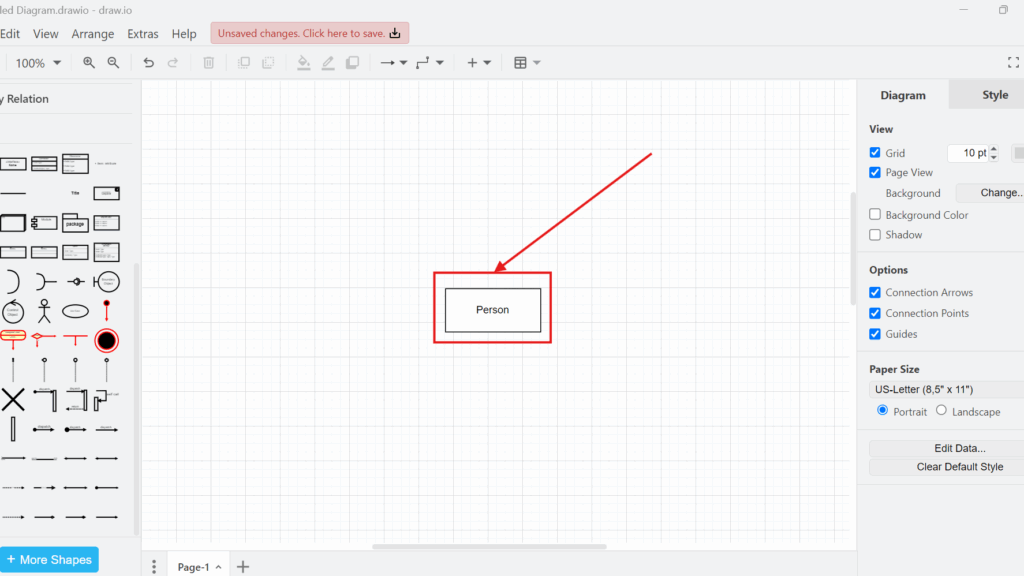
When I work with UML diagrams, I always pay close attention to the syntax and semantics of UML classes. They define how each element is structured and how it behaves within the model. Getting the syntax and semantics of UML classes right ensures that every diagram communicates clearly and accurately. This precision is vital in requirements modeling, where consistency and meaning turn abstract ideas into actionable system designs that teams can understand and build upon effectively.
How I Represent a UML Class
I represent a UML class as a rectangle. I place the class name in the upper compartment.
The class name identifies the concept that the class represents.
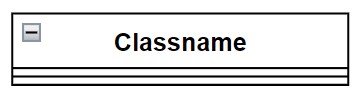
Use the image labeled Classname.
From General Syntax to a Concrete Class
Next, I replace the general class name with a meaningful domain term.
For example, if my requirements concern people, I can create the class Person.
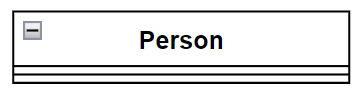
Use the image labeled Person.
I prefer singular class names. Therefore, I use Person rather than Persons. The class represents the general concept, not a collection of people.
I choose a class name that clearly describes the concept I want to model.
Syntax and Semantics
Syntax concerns how I represent the class. In this example, I use the UML rectangle and place Person in the class-name compartment.
Semantics concerns what Person means in my model.
For example, if a requirement states that the system must display data about a person, Person becomes a relevant concept for my information model.
Therefore, I first identify important concepts in the requirements. Then, I represent them as UML classes where this helps me structure the information.
Syntax defines the representation, while semantics defines its meaning.
Conclusion
UML classes help me represent important concepts from the requirements domain. I use the correct UML notation and choose names that express the intended meaning clearly.
A useful UML class combines clear notation with a clear domain meaning.
What’s Next?!
If I want to build a stronger UML class model, the next step is to learn how I identify the right classes. That is why I continue with Identifying Classes (1): A Heuristical Approach. In that article, I show how I use practical heuristics to find relevant classes in a structured way. As a result, I can move from vague domain ideas to clearer and more useful UML models.
Understand Requirements More Clearly Through Modeling
If I want to move beyond isolated requirement statements, I need models that make systems easier to see and explain. In the main article on Requirements Modeling, I explore essential Modeling Concepts, Process Modeling with BPMN, and the structural perspective of UML. Together, these topics help me visualize workflows, understand relationships, and describe complex systems with more clarity. Click through to see how Requirements Modeling helps me turn abstract requirements into structured, practical, and easier-to-communicate insights.
This article covers concepts that are also included in the CPRE certification syllabus.