
Process orientation helps organizations create clear and efficient workflows. It focuses on documenting, standardizing, and improving business processes. As a result, employees understand their roles, responsibilities, and handovers better. This reduces confusion, improves coordination, and supports smoother daily operations.
Why Do We Need Process Management?
In a fast-changing business world, organizations must adapt quickly. Process management provides a structured approach to maintaining efficiency, improving service delivery, and achieving strategic goals. It enhances transparency, boosts productivity, and ensures quality standards are met.
The Advantages of Process Orientation
Transparency and Traceability
Clear processes make an organization more transparent. When employees understand each process step, they see why changes happen. Documentation ensures that decisions remain traceable, reducing confusion and increasing accountability.
Achievement of Strategic Goals
Every business has goals. Process management aligns workflows with these objectives. By mapping out all processes, we can ensure that activities contribute to long-term success. This makes it easier to track progress and adjust strategies when needed.
Optimization of Processes
Efficiency matters. Standardized workflows prevent redundant steps and unnecessary approvals. By adopting best practices, we can streamline operations, reduce delays, and improve customer satisfaction. Higher efficiency leads to better resource utilization and increased productivity.
Adaptability
Markets and regulations change constantly. A well-structured process framework allows organizations to adapt quickly. Whether legal requirements shift or customer demands evolve, flexible processes enable smooth transitions.
Quality Assurance
Customer satisfaction depends on quality. Process management helps identify weak points early, ensuring consistent service delivery. By maintaining high standards, organizations protect their reputation and build long-term customer trust.
Improved Communication and Collaboration
Siloed departments slow down operations. Clear responsibilities and standardized processes foster teamwork. Employees understand how their work contributes to the bigger picture, improving motivation and collaboration across teams.
Knowledge Retention and Improved Training
Employee turnover can disrupt workflows. Documented processes preserve knowledge within an organization. This simplifies onboarding, speeds up training, and ensures continuity when key employees leave.
Example: Streamlining the Onboarding Process
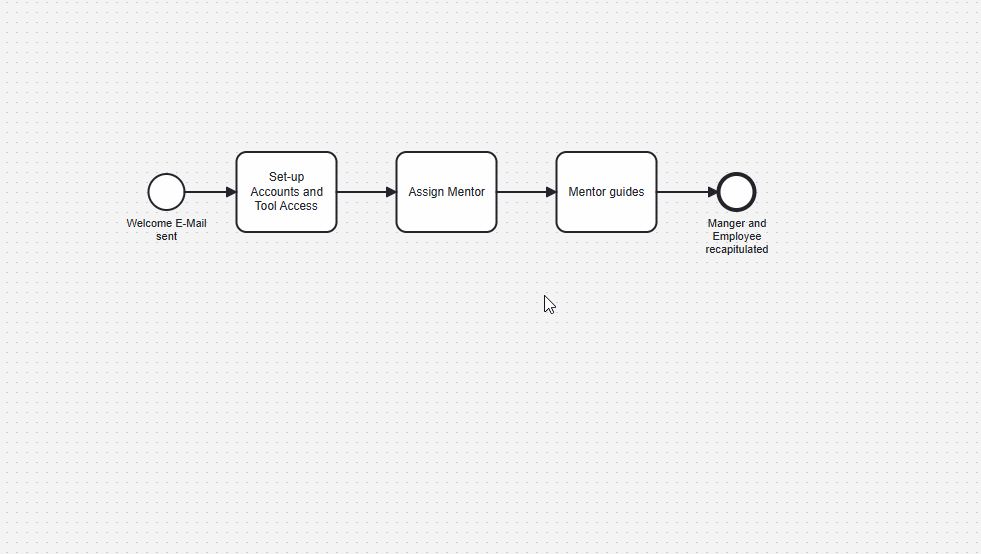
Imagine a company struggling with inefficient employee onboarding. New hires receive inconsistent instructions, leading to delays and frustration. By introducing a standardized onboarding process, we ensure that every new employee follows the same steps:
- HR sends a welcome email with essential documents.
- IT sets up accounts and provides access to tools.
- The manager assigns a mentor.
- The mentor guides the new employee through key workflows.
- The Manager recapitulates after six month in.
Final Thoughts
Process orientation transforms businesses. It enhances transparency, improves efficiency, and ensures quality. Organizations that embrace process management can adapt quickly, achieve strategic goals, and create a better working environment. By streamlining workflows, we lay the foundation for sustainable success.
What’s Next
Now that I have explained why process orientation matters, I can apply the idea to a more complex environment. Public sector organizations often face strict rules, many stakeholders, and long approval paths. Therefore, process orientation can help make public services clearer, faster, and more citizen-focused.
Read Reimagining Public Sector through Process Orientation next. In that article, I show how process thinking can improve administrative workflows, reduce friction, and support better service delivery. As a result, you can see how public organizations can move from isolated tasks to transparent end-to-end processes.
Management Connects Public Service with Better Workflows
Read Management to see how I connect business direction, requirements, services, and processes in one practical overview. In the main article, I explore Management, Requirements Management in the IREB CPRE context, and Process Management in the BPMN context. Therefore, you can understand how structured management supports clearer decisions, better services, and more efficient workflows. As a result, management becomes a useful guide for creating value in both public and private organizations.
Read Processes to see how I connect Process Management, BPMN, and Camunda in one practical overview. In the main article, I show how process management creates structure, how BPMN makes workflows visible, and how Camunda supports BPMN modeling as a practical tool. Therefore, you can understand how organizations can turn complex work into clear process models. As a result, processes become easier to analyze, improve, and use for better decisions in public and private organizations.
Credits: The diagrams were created with Camunda.