
In our world of fast-growing technology, it’s super important to make new systems work smoothly with the way businesses already do things. A great way to do this is by figuring out what these new systems need from the documents that explain how things work now. This article will show you how to do that step by step, using smart ideas from science. In this article you read about requirements identification with process documents.
Requirements Identification with Process Documents
Understanding how to identify requirements with process documents helps me see how work really flows across systems, teams, and responsibilities. These documents show where information moves, where decisions happen, and where gaps may create problems later. However, process documents are only one part of requirements work. To understand the people, roles, and needs behind the requirements, continue with Matters Identifying Stakeholders and Information Sources for IT Requirements. For a broader foundation, also read the main article Requirements Engineering and explore how clear requirements support successful software projects.
Why I Use Process Documents
Process documents show how work should or currently does flow through an organization. Therefore, they provide valuable input for requirements elicitation.
I may examine process models, flowcharts, work instructions, procedures, and checklists. Together, these sources can reveal activities, decisions, responsibilities, data, interfaces, and business rules.
However, documentation can be outdated or incomplete.
I use process documents as requirements sources, but I verify their content against actual business practice.
Step 1: Understand the Process Documents
First, I identify the documents that describe the relevant process.
A process model can show sequence and dependencies. Work instructions explain individual activities in more detail. Checklists can reveal mandatory controls or conditions.
I look specifically for:
- activities and decisions,
- inputs and outputs,
- roles and responsibilities,
- systems and interfaces,
- data and information flows,
- rules and exceptions.
The attached diagram provides a simple example of how a visual process representation can make information flow visible.
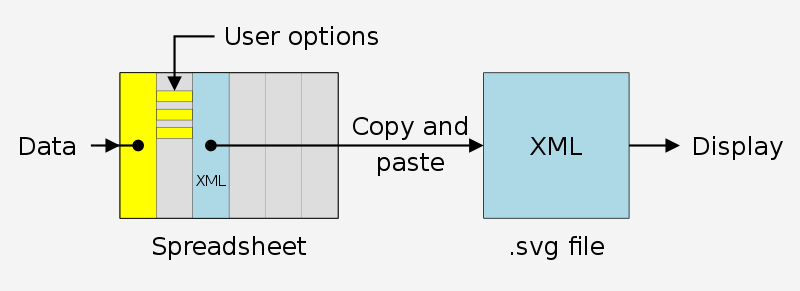
Visual process representations help me identify interactions, transformations, and interfaces that may lead to requirements.
Step 2: Identify the Relevant Processes
Not every documented process matters for the planned system.
Therefore, I determine which processes fall within the system context. I ask which activities the system should support, which processes exchange information with it, and which surrounding processes may change.
This keeps the analysis focused.
I concentrate on processes that influence the scope, behavior, interfaces, or constraints of the intended system.
Step 3: Connect Processes With Business Goals
Process documents usually describe how work happens. However, they do not always explain why the organization performs it that way.
Therefore, I connect the current process with business goals.
For example, the organization may want to reduce processing time, improve data quality, automate manual work, reduce errors, or meet a new constraint.
This distinction prevents me from simply transferring an inefficient existing process into a new system.
The current process gives me a starting point, but it does not automatically define the desired future process.
Step 4: Validate the Process With Stakeholders
Next, I compare the documentation with stakeholder knowledge.
I speak with process owners, users, subject matter experts, and other affected stakeholders. They can identify undocumented exceptions, workarounds, dependencies, and changes.
For example, a documented automated transfer may actually require regular manual correction.
Such differences can create important requirements.
Therefore, document analysis and stakeholder elicitation complement each other.
Step 5: Derive and Organize Requirements
Once I understand the process and its goals, I derive requirements for the future system.
These may concern:
- functionality,
- data,
- interfaces,
- business rules,
- permissions,
- quality,
- or operational constraints.
I also keep important links between a requirement and the process information that caused it.
I derive requirements from the meaning of the process information rather than copying process descriptions into requirements.
This improves both clarity and traceability.
Step 6: Validate and Refine the Requirements
Finally, I validate the resulting requirements with relevant stakeholders.
I check whether they support the intended process and business goals. In addition, I look for gaps, contradictions, incorrect assumptions, and unnecessary functionality.
If new information appears, I refine both my understanding of the process and the requirements.
Therefore, requirements identification remains iterative.
From Existing Process to Better System
Process analysis does more than preserve existing behavior.
It can also expose improvement opportunities.
Repeated manual data entry may indicate an integration requirement. Frequent corrections may reveal missing validation. Several handovers may suggest unnecessary process complexity.
Requirements identification should preserve necessary business behavior while also questioning avoidable inefficiency.
This is where process documents become especially useful for system integration and change.
Conclusion
I use process documents to understand existing work before I define system requirements.
First, I analyze the documentation. Then I identify relevant processes, connect them with business goals, validate them with stakeholders, derive requirements, and validate the result.
Requirements identification with process documents connects existing business knowledge with clear and traceable requirements for future systems.
This approach helps me identify functions, interfaces, constraints, gaps, and improvement opportunities without assuming that the documented process already represents the best solution.
Credits: Photo by Google DeepMind from Pexels | Example Flow chart by RCraig09 from Wikimedia Commons under the license Creative Commons — Attribution-ShareAlike 4.0 International — CC BY-SA 4.0