
Fred

Flow diagram with boxes “Input,” “Output,” and “Object,” plus rounded steps labeled “1.1” to “1.9” each showing “Row 1.”

Requirements Modeling with Dynamic Views

When developing a system, understanding requirements is essential. It’s like constructing a house — the blueprint must come first. I’ve learned that dynamic views in requirements modeling are powerful for illustrating how a system behaves over time. They reveal interactions, processes, and reactions between components. By using dynamic views, we gain a deeper understanding of system logic and performance. Let’s explore how this approach brings models to life and connects design with real behavior.

Requirements Modeling with Dynamic Views Read More »

Cropped class diagram snippet with a box labeled “Contact” above boxes including “Client” and “Supplier”, plus text “kind {incomplete, overlapping}”.

Understanding UML Generalization and Specialization

UML (Unified Modeling Language) is a powerful tool for modeling complex systems, and one of its most useful concepts is UML generalization and specialization. These ideas help organize and simplify relationships by showing how broader classes can share common traits with more specific ones. In this article, I’ll explain how UML generalization and specialization work in practice, using clear examples and a real business case to make these concepts easy to understand and apply.

Understanding UML Generalization and Specialization Read More »

Cropped class diagram with “Person”, “Order”, and “Address”, multiplicities (1, 0.., 1.., 0..1), and a note saying “For each purchase a delivery address must exist.”

4 Practical Tips for UML Modeling – Making Your Diagrams Speak for Themselves

Creating UML diagrams can seem overwhelming at first, but with the right approach, it becomes much easier. In this article, I’ll share practical tips for UML modeling to help you create clear and meaningful diagrams. These tips for UML modeling focus on avoiding common mistakes, improving consistency, and enhancing communication across teams. By following them, you’ll gain confidence in turning complex ideas into structured visual models that truly represent your system.

4 Practical Tips for UML Modeling – Making Your Diagrams Speak for Themselves Read More »

Unveiling the Essence of Elicitation Objectives in Requirements Engineering

In the world of computer science, requirements act as the blueprint for every successful project. Before development begins, it’s essential to understand these needs clearly. This is where elicitation objectives in engineering come into play. They define what must be achieved during the discovery process to ensure accuracy and alignment. In this article, we explore how elicitation objectives guide effective requirements engineering and IT business analysis.

Unveiling the Essence of Elicitation Objectives in Requirements Engineering Read More »

Cropped diagram showing a box labeled “Route” connected to “Starting Point,” “Destination,” and a partially visible “Place of …” with diamond markers and multiplicities.

What are UML Aggregation and Composition?

As a requirements engineer, I often explore the depth of UML and how it visualizes system connections. Understanding what are UML aggregation and composition is essential for modeling effective “part/whole” relationships. These concepts show how one class can include or depend on another, helping us design systems with clear structure and hierarchy. In this article, I’ll explain what are UML aggregation and composition and how they make complex systems easier to understand.

What are UML Aggregation and Composition? Read More »

Cropped diagram snippet showing the label “Correspondence address” and a relationship text “lives at” with a small black triangular marker.

How to Determine Simple UML Relationships with Heuristics

At first, learning how to determine simple UML relationships can seem challenging, but with the right approach, it becomes much clearer. By applying a few practical heuristics, you can easily identify how classes and objects connect within your model. In this article, I’ll explain how to determine simple UML relationships step by step, using real examples and scenarios that make the process intuitive and effective for building a structured, meaningful class diagram.

How to Determine Simple UML Relationships with Heuristics Read More »

What is an Achieved Resolution Result in Requirements Engineering?

In the world of technology, conflicts are a constant challenge in requirements engineering and IT business analysis. To address them, experts rely on the resolution result in requirements engineering, a key outcome that ensures clarity and alignment among stakeholders. Software projects are complex, and this process helps transform conflicting needs into actionable solutions. In this article, we explore what a resolution result is and why it plays a vital role in project success.

What is an Achieved Resolution Result in Requirements Engineering? Read More »

Cropped Jira “Go to market” project Summary dashboard showing “Good afternoon, Fred,” activity cards, a 45% To Do status chart, and Recent activity.

Choosing Jira for Project Management: When It Fits Your Team

When I first explored project management tools, I asked myself: Why Should I Use Jira? The answer became clear quickly. Jira helps me plan, track, and manage work with structure. It supports agile teams, clear workflows, and better collaboration. In this article, I’ll show why Jira became my go-to tool and how it helps teams stay organized, productive, and in control.

Choosing Jira for Project Management: When It Fits Your Team Read More »

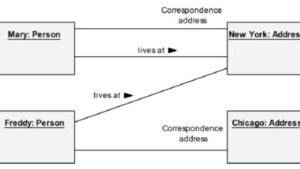
Diagram showing “Mary: Person” and “Freddy: Person” linked to “New York: Address” and “Chicago: Address,” with labels “lives at” and “Correspondence address.”

Modeling Simple UML Relationships

In my experience as a tech blogger, Simple UML Modeling Relationships often appear more complex than they really are. The good news is, they’re easy to grasp once you understand the basics. These relationships define how classes and objects connect within a system, forming the backbone of clear and logical models. In this article, I’ll explain how Simple UML Modeling Relationships work, provide examples, and show why mastering them is essential for effective software design.

Modeling Simple UML Relationships Read More »

Involved Requirements Sources in Requirements Conflicts

In software development, requirements engineering and IT business analysis are essential for defining what a system must achieve. Yet, challenges often occur when goals or expectations clash, leading to requirements sources in requirements conflicts. These conflicts emerge from differing stakeholder needs, priorities, or interpretations. Understanding their origins is key to resolving them effectively. This article explores how managing these sources helps maintain clarity and balance in complex projects.

Involved Requirements Sources in Requirements Conflicts Read More »

Cropped inheritance diagram showing “Parent” and “Child” class boxes connected by a generalization arrow, with a callout reading “String is child of the greater Object clas…” (text truncated).

Heuristics for Determining Data Types

As a data modeler, requirements engineer, and IT business analyst, I’ve learned that choosing the right data types is both strategic and creative. It’s not only about technical accuracy but also about ensuring long-term stability as projects evolve. Complex data structures can make this task challenging, but heuristics for determining data types make it manageable. In this guide, I’ll share practical insights and examples to help you apply these heuristics effectively in your own projects.

Heuristics for Determining Data Types Read More »

Box labeled “ Data type” with entries “a1” and “a2,” plus a small minus icon in the top-left.

UML Data Types: Simplifying Complex Concepts

When working with UML, understanding UML structured data types is essential for clear and consistent modeling. Data types define which values a model can use, ensuring precision and preventing confusion. UML includes three main categories: primitive, structured, and enumerations. Primitive types handle basic elements like text or numbers, while UML structured data types describe complex objects. Enumerations define fixed value sets. Comparing them reveals how each supports different modeling needs.

UML Data Types: Simplifying Complex Concepts Read More »

Scroll to Top
WordPress Cookie Plugin by Real Cookie Banner