Fred

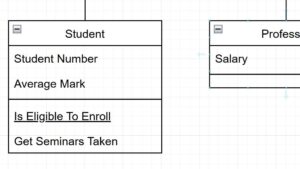
Class box titled “Student” listing “Student Number” and “Average Mark,” with underlined “Is Eligible To Enroll” and “Get Seminars Taken”; partial “Professor” box on the right.

Heuristics for Determining Attributes

When working in object-oriented design, identifying the right attributes can seem challenging at first. But with the right guidance, it becomes much simpler. Heuristics for determining attributes provide practical rules to distinguish between classes and their properties, ensuring a clear and consistent model. These heuristics help refine system structure and improve design quality. In this article, I’ll share my personal approach to applying heuristics for determining attributes effectively.

Heuristics for Determining Attributes Read More »
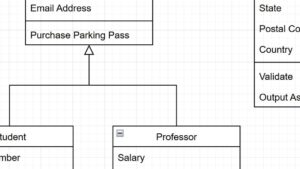
Partial class diagram with a generalization arrow and boxes containing text like “Email Address,” “Purchase Parking Pass,” and a cropped box listing “State,” “Postal Co…,” and “Country.”

What Are UML Class Attributes? A Quick Guide

When exploring UML (Unified Modeling Language), understanding the concept of an UML Class Attribute is essential. They define the properties or characteristics of a class and describe what information each object will hold. In short, UML Class Attributes give structure and meaning to your models. They transform abstract ideas into concrete data representations. Let’s take a closer look together and see how mastering UML Class Attributes can make your system designs clearer and more effective.

What Are UML Class Attributes? A Quick Guide Read More »

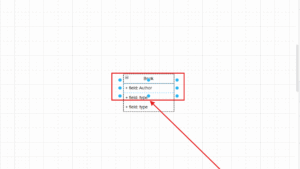
Small “Book” class-style box with fields including “+ field: Author” and “+ field: type,” highlighted by a red rectangle and red arrow.

Identifying Classes (2): with Objects, Roles, and Functions

When building software, it’s essential to break a system into clear, manageable parts. One of the most important steps is identifying classes that represent the system’s core structure. While it may seem challenging at first, a structured approach makes it much easier. By analyzing objects, their roles, and their functions, we can systematically identify meaningful classes. In this article, I’ll guide you through a practical and effective method to make identifying classes both logical and intuitive.

Identifying Classes (2): with Objects, Roles, and Functions Read More »

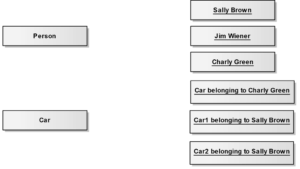
Boxes labeled “Person” and “Car” on the left, with multiple named boxes on the right (e.g., “Sally Brown,” “Jim Wiener,” and “Car1 belonging to Sally Brown”).

Identifying Classes (1): A Heuristical Approach

When exploring software development, one crucial task is identifying classes that form the system’s foundation. At first, this can feel complex, but with the right mindset, it becomes clear and intuitive. By focusing on real-world elements and their relationships, we can uncover the classes that define structure and behavior. In this article, I’ll guide you through a simple, practical approach to identifying classes, using relatable examples to make the process easy to understand and apply.

Identifying Classes (1): A Heuristical Approach Read More »

Understanding the Importance of Requirements Sources in Computer Science

In computer science, understanding where our requirements come from is crucial. These origins, known as requirements sources, shape every stage of a project’s success. They provide the foundation for accurate analysis, clear communication, and effective system design. Recognizing the importance of requirements sources helps ensure that software solutions truly meet user needs and business goals. In this article, we explore their vital role in modern software development.

Understanding the Importance of Requirements Sources in Computer Science Read More »

draw.io editor screenshot with a centered box labeled “Person,” highlighted by a red rectangle and a red arrow.

UML Classes Explained: Structure, Meaning, and Modeling Rules

When I work with UML diagrams, I always pay close attention to the syntax and semantics of UML classes. They define how each element is structured and how it behaves within the model. Getting the syntax and semantics of UML classes right ensures that every diagram communicates clearly and accurately. This precision is vital in requirements modeling, where consistency and meaning turn abstract ideas into actionable system designs that teams can understand and build upon effectively.

UML Classes Explained: Structure, Meaning, and Modeling Rules Read More »

Understanding Result Quality in Requirements Engineering

In the field of computer science and technology, Result Quality in Requirements Engineering plays a crucial role in achieving successful project outcomes. It focuses on ensuring that every step of the development process leads to high-quality, reliable, and user-focused results. Think of it as the measure of how well requirements are defined, understood, and implemented. In this article, we break down this concept to make it clear and easy to grasp.

Understanding Result Quality in Requirements Engineering Read More »

draw.io editor showing a “Book” box with “+ field: Author,” “+ field: Inventory number,” and “+ field: Title,” highlighted in red with an arrow.

Understanding UML Classes and Objects: A Practical Guide

When working on software projects, getting the structure right from the beginning is essential for long-term success. One concept I rely on in requirements modeling is UML, the Unified Modeling Language. Within it, UML classes and objects form the foundation of effective system design. They define how elements relate, interact, and behave within a system. By understanding UML classes and objects, we can model real-world scenarios clearly and create software that’s both logical and maintainable.

Understanding UML Classes and Objects: A Practical Guide Read More »

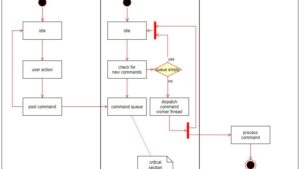
Partial multi-lane flow diagram with steps “idle”, “user action”, “post command”, “check for new commands”, “command queue”, decision “queue empty”, and “process command” connected by red arrows.

Unlocking the Power of Information Structure Modeling

When I think about creating a system that runs seamlessly, one thing becomes clear — structure matters. True clarity starts with how we organize and represent data. That’s where information structure modeling comes in. It might sound complex at first, but it’s a real game-changer. By modeling information structures effectively, we turn abstract data into meaningful relationships that drive smarter design, improve communication, and make every part of the system work in harmony.

Unlocking the Power of Information Structure Modeling Read More »

Cropped Jira dashboard titled “Leilas Dashboard” with an “Assigned to Me” gadget on the left and “Activity Streams” on the right.

Jira for Project Teams: Collaboration, Visibility, and Productivity Benefits

As a tech enthusiast, I like tools that make teamwork easier. Jira stands out because it gives teams structure, flexibility, and clear collaboration. In this article, I explore the key advantages of Jira and show how it improves workflows, visibility, and productivity. You will see why Jira helps modern teams stay organized, manage projects better, and work with more confidence.

Jira for Project Teams: Collaboration, Visibility, and Productivity Benefits Read More »

Understanding the Importance of Requirements Elicitation in Tech Projects

In the world of modern development, Requirements Elicitation in Tech Projects stands as a crucial practice. It’s not just a technical term but a structured approach to identifying what a project truly needs. This method guides teams in choosing the right actions and gathering essential data. Yet, it’s no one-size-fits-all formula. Think of it as a flexible recipe—one that adapts to each project’s unique goals, challenges, and context for the best possible results.

Understanding the Importance of Requirements Elicitation in Tech Projects Read More »

“YOUR APPS” list showing “Atlassian Home,” “Jira,” and “Jira Work Management” with their icons.

Comparison of Confluence & Jira: A Comprehensive Guide

As a tech blogger, I’m often asked about the best tools for team collaboration and project management. In this article, I’ll provide a detailed comparison of Jira and Confluence, two powerful Atlassian tools that are often used together. While they share the same ecosystem, each serves a unique purpose. Let’s explore how Jira and Confluence differ, how they complement each other, and how using both can create a complete solution for managing projects and documentation.

Comparison of Confluence & Jira: A Comprehensive Guide Read More »

Eliciting Requirements A Lot Like Doing Research

Have you ever thought about how experts know what a computer program should do? It’s a bit like doing research! In this article, we explore how planning and carrying out requirement activities, known as elicitation, are similar to a research process. Both need careful planning, observation, and analysis. Read more to see how Eliciting Requirements Doing Research helps us discover what users really need.

Eliciting Requirements A Lot Like Doing Research Read More »

Navigating Software Project Estimation and Requirements Elicitation

This article highlights the importance of Project Estimation and Requirements Elicitation in software development. It explains how both ensure successful project outcomes by defining goals and predicting needed resources. It also explores whether every estimation detail can be planned in advance, noting that this depends on how confident we are in our assumptions. Read more about navigating Project Estimation and Requirements Elicitation effectively!

Navigating Software Project Estimation and Requirements Elicitation Read More »

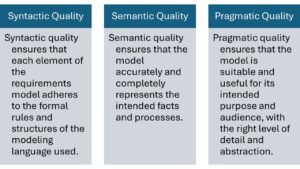
Three-column infographic titled “Syntactic Quality,” “Semantic Quality,” and “Pragmatic Quality,” each with a short explanatory paragraph.

Understanding the Quality Criteria of Requirements Models

When I evaluate the quality criteria of requirements models, I concentrate on three essential dimensions: syntactic, semantic, and pragmatic quality. Each plays a distinct role in determining how clearly and effectively a model communicates information. Syntactic quality ensures correctness of structure, semantic quality secures meaningful content, and pragmatic quality guarantees usability and understanding. Together, they define the overall effectiveness and reliability of any requirements model.

Understanding the Quality Criteria of Requirements Models Read More »

Scroll to Top
WordPress Cookie Plugin by Real Cookie Banner