
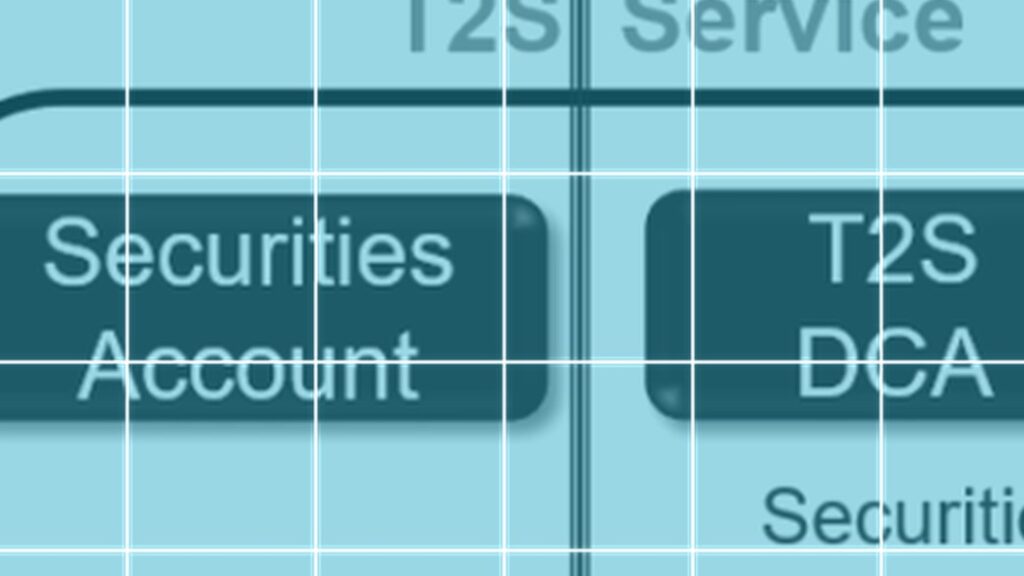
I define the TARGET Service T2S as the Eurosystem platform for the settlement of securities transactions in central bank money. In simple terms, this system brings securities settlement and cash settlement together on one technical platform. Therefore, it reduces fragmentation and increases efficiency across European financial markets.
First, I explain the core idea. Before T2S, many markets settled securities with national infrastructures and different local practices. As a result, cross-border settlement often required extra steps, extra interfaces, and extra costs. T2S changes this model. It provides a single settlement engine for Europe. Consequently, domestic and cross-border transactions can follow the same settlement approach.
Next, I describe what T2S does. This TARGET SERVICE settles securities transactions on a delivery-versus-payment (DvP) basis. That means securities and cash move together. Either both legs settle, or none do. Therefore, settlement risk decreases. Moreover, T2S uses central bank money for the cash leg. As a result, it supports trust and stability in the settlement process.
Then, I place T2S within the TARGET Services ecosystem. This system does not work in isolation. Instead, it interacts with other TARGET Services for liquidity and cash movements. In practice, participants provision liquidity for settlement and use dedicated cash arrangements that connect to central bank money settlement. Consequently, T2S and T2 must align on processes, timing, and operational readiness. This interaction matters for system analysis. Therefore, I model T2S explicitly in context diagrams and I describe its interfaces clearly.
From a business perspective, T2S exists to improve harmonisation and operational efficiency. It standardises settlement procedures and supports more consistent processing across Europe. Therefore, market participants can simplify their operational setups. In addition, a shared settlement platform supports competition and transparency. As a result, the market can reduce complexity and friction over time.
From a requirements engineering perspective, I treat T2S as a critical external system in many analyses. It drives strict expectations for processing speed, predictable settlement windows, and resilient operations. Moreover, it introduces clear dependencies between cash management, securities settlement, and operational schedules. Therefore, I link requirements across systems and I manage traceability carefully.
Finally, I connect T2S to resilience thinking. Securities settlement is systemically important. Therefore, I analyse failure scenarios, recovery needs, and throughput limits early. As a result, I reduce integration risk and I improve the quality of requirements.
« Back to Glossary Index